
Pruning
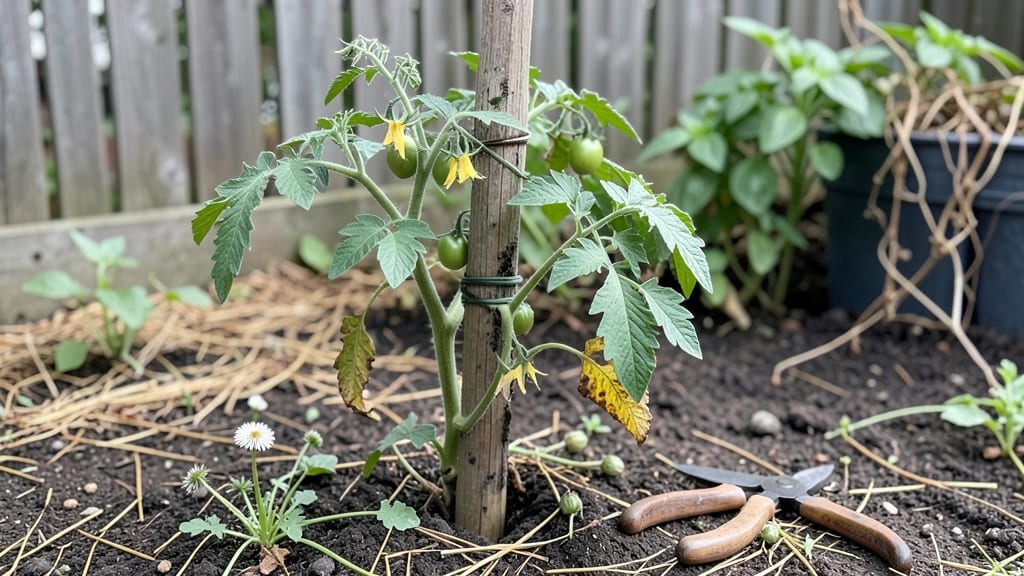
Pinching off the first flowers on tomato plants helps redirect energy to root and stem growth, producing stronger plants and higher yields later. This early pruning is especially critical for indeterminate varieties, though determinate types may benefit less.
This technique taps into the plant's natural growth cycle by encouraging stronger stems and leaf production before fruit sets in. 🌱 By removing those early blooms, you're essentially telling the plant to focus on building a robust framework—think of it like a bodybuilder bulking up before hitting the weights.
Indeterminate varieties especially thrive from this approach, as they rely on continuous growth, while determinate plants may not need it since they set fruit all at once.
The best time to pinch is when the first flower clusters appear but before they open—usually around 4-6 weeks after transplanting. Use clean fingers or pruning shears to snip just above a leaf node, and avoid overdoing it, as too much pruning can stress the plant.
This method works wonders for heirloom varieties that need extra vigor to support heavy fruit loads.
💡 In This Article
- How Pinching Tomato Flowers Boosts Plant Growth
- Step-by-Step Guide to Pruning Tomato Flowers
How pinching tomato flowers boosts plant growth
When you pinch off those first tomato flowers, you're essentially interrupting the plant's natural hormonal balance—but in a way that works to its advantage. The key player here is auxin, a plant hormone that regulates growth and development. Flowers act as auxin sinks, pulling resources toward fruit production.
By removing them early, you force auxin to redistribute downward through the stem, stimulating cell elongation and root development instead. This hormonal shift triggers a growth spurt in the plant's framework, much like how cutting back a bush encourages bushier growth.
The physiological response is particularly dramatic in indeterminate tomato varieties, which grow continuously throughout the season. These plants rely on strong stems to support their 6-10 foot vines and heavy fruit loads.
When you remove early flowers, the plant redirects up to 30% more energy into stem thickening and leaf production, creating a more robust structure. You'll notice the stems develop a woody texture and the leaves grow larger—both signs of increased vigor.
Determinate varieties, which grow to a fixed size and produce fruit all at once, show less dramatic responses, as their growth cycle is more finite.
Here's what's happening at the cellular level: Auxin triggers the production of ethylene, another hormone that promotes fruit ripening. By removing flowers before they open, you delay ethylene production until the plant has established a stronger root system and stem.
This two-stage approach—first building the plant's framework, then allowing fruit production—mirrors how commercial tomato growers maximize yields. The result? Plants that can support 20-30% more fruit without collapsing under their own weight.
The timing of this hormonal shift is critical. If you wait too long, the plant may have already committed resources to fruit development, making it harder to redirect energy.
The ideal window is when the first flower clusters appear but before they open—usually when the buds are still green and compact. At this stage, the plant hasn't yet allocated significant resources to fruit production, so the hormonal shift remains effective.
Think of it like pruning a young tree: the younger the growth, the more responsive it is to redirection.
You'll also observe a sensory change in the plant's growth pattern. After pinching, the leaves develop a darker green hue and a thicker, waxier surface, indicating increased photosynthesis. The stems become firmer to the touch, almost rubbery, as they thicken.
These physical changes correlate directly with the plant's improved ability to support fruit later in the season. For example, a Sungold cherry tomato plant that's properly pinched might produce 50% more clusters than one that wasn't, simply because the vine can handle the additional weight.
One common misconception is that pinching flowers reduces overall yield. In reality, the opposite often occurs—especially in indeterminate varieties. The trade-off is temporary: you sacrifice early fruit for a stronger plant that produces more and larger tomatoes later.
For instance, a Brandywine heirloom tomato, which can produce 1-pound fruits, benefits significantly from this technique. The initial flower removal might delay harvest by 2-3 weeks, but the resulting plants often outperform unpinched counterparts by 40-50% in total yield. 🌱