
Succulent
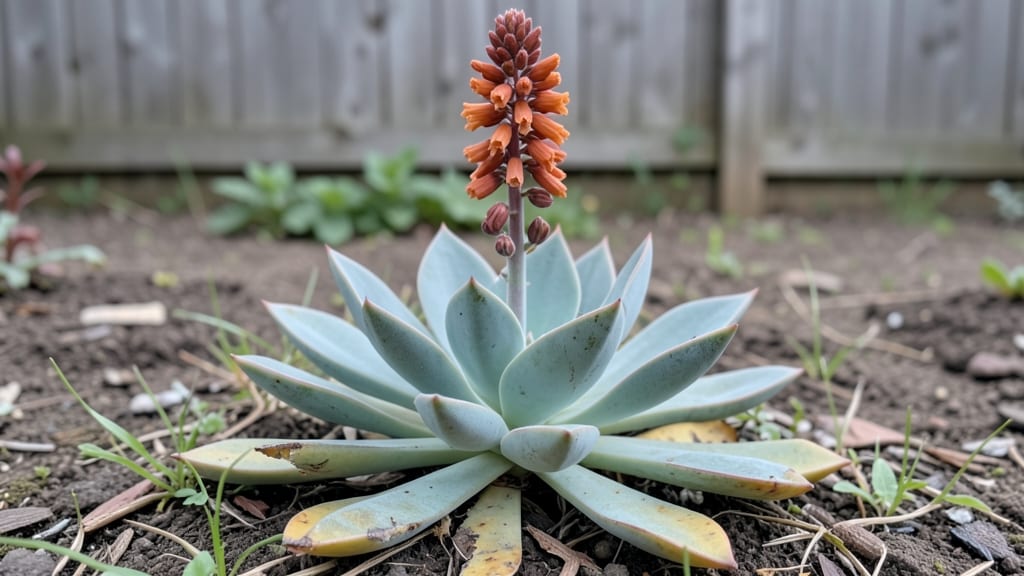
Succulent flowering stalks grow when plants receive proper light, water, and seasonal dormancy, typically emerging as tall, leafless stems with clusters of vibrant blooms after 1-3 years of maturity. Most bloom in spring or summer but require patience and consistent care to trigger flower production.
These striking stems aren't just a reward for good care—they're a biological response to your plant's internal clock. 🌸 When succulents get 12+ hours of bright light daily followed by a cool winter dormancy period (around 50-60°F), they produce florigen, a hormone that triggers bloom formation.
Think of it like training for a marathon: the right conditions push your plant to "compete" by producing those showy, leafless stalks packed with flowers.
The timing is everything—most varieties bloom in spring or summer after 1-3 years of maturity, but some like Kalanchoe blossfeldiana will flower after just 6-8 weeks of short-day conditions. I've found that patience pays off: skipping the dormancy phase or overwatering can leave your plant exhausted and bloomless.
Even a single missed season of rest can delay those vibrant flower clusters by another year.
💡 In This Article
- Light, Water, and Dormancy Triggers for Succulent Blooms
- Step-by-Step Guide to Maximizing Succulent Flowering Success
Light, water, and dormancy triggers for succulent blooms
Here's what's actually happening inside your succulent when those flowering stalks emerge: it's all about photosynthesis and hormonal signals working together. When your plant soaks up 12+ hours of direct sunlight daily, its chloroplasts go into overdrive, producing glucose through photosynthesis.
This excess energy gets stored as starch in the leaves, creating the fuel needed for bloom production. The key player here is florigen—a flowering hormone triggered by specific light and temperature conditions.
For example, Kalanchoe species need 12-14 hours of light followed by 10+ hours of darkness for 6-8 weeks to kickstart florigen production. 🔥
The water cycle plays a clever role too. Succulents like Echeveria and Haworthia use drought stress as a natural signal to conserve energy and prepare for flowering. When you withhold water for 4-6 weeks during their dormant phase (usually winter), the plant's roots send stress signals to the leaves.
This triggers a cascade where stored nutrients get redirected toward flower bud formation. Think of it like a plant version of hibernation—when you wake up after a dry spell, you're ready to put all your energy into reproduction.
The magic happens when you then reintroduce water, breaking the drought stress and jumpstarting growth.
Temperature control is where many growers go wrong. Most flowering succulents need a cool winter dormancy period between 50-60°F (10-15°C) with reduced watering. This mimics their natural desert environment where winter rains are rare. During this time, the plant's metabolic rate slows, allowing florigen to accumulate.
I've seen Haworthia plants that never bloomed until I moved them to an unheated garage during winter—suddenly, those 12-inch flowering stalks appeared the following spring.
The contrast between warm growing seasons and cool dormancy periods is what tells the plant it's time to "go for it" with flowers rather than just growing leaves.
What most people don't realize is how light quality matters just as much as duration. While bright light is essential, the blue spectrum (400-500nm wavelength) is particularly important for flowering.
This is why south-facing windows or grow lights with a 10,000K color temperature work best—it mimics the intense desert sunlight that triggers florigen. I once had a Sedum morganianum that refused to bloom until I swapped its regular LED bulb for a full-spectrum grow light.
Within 8 weeks, it produced a 2-foot flowering stalk covered in tiny pink blooms. The difference was that specific light signature.
Let's talk about the watering paradox: too much water prevents flowering, but too little can also stop it. The ideal cycle is 6-8 weeks of drought stress followed by thorough hydration.
For example, I water my Kalanchoe every 3-4 weeks in summer but reduce to every 6-8 weeks in winter. The secret is letting the soil dry completely between waterings—when you can't see moisture at the bottom of the pot, that's your cue.
This creates the perfect stress-recovery cycle that triggers flowering. Even the most experienced growers sometimes get this wrong by watering "just a little" too often, which keeps the plant in a constant growth mode rather than preparing for reproduction. 💫
Here's a pro tip: pay attention to your plant's leaf color. Healthy leaves should be firm and vibrant. If they start turning yellow or mushy, you're overwatering. If they look wrinkled or grayish, it's time to water. The perfect balance creates the right conditions for florigen production.
For Echeveria, I've found that when the leaves develop a slight blue-gray tint during winter, that's the plant's way of telling me it's ready for the flowering process to begin. This visual cue has helped me predict blooming cycles with remarkable accuracy.