
Watering
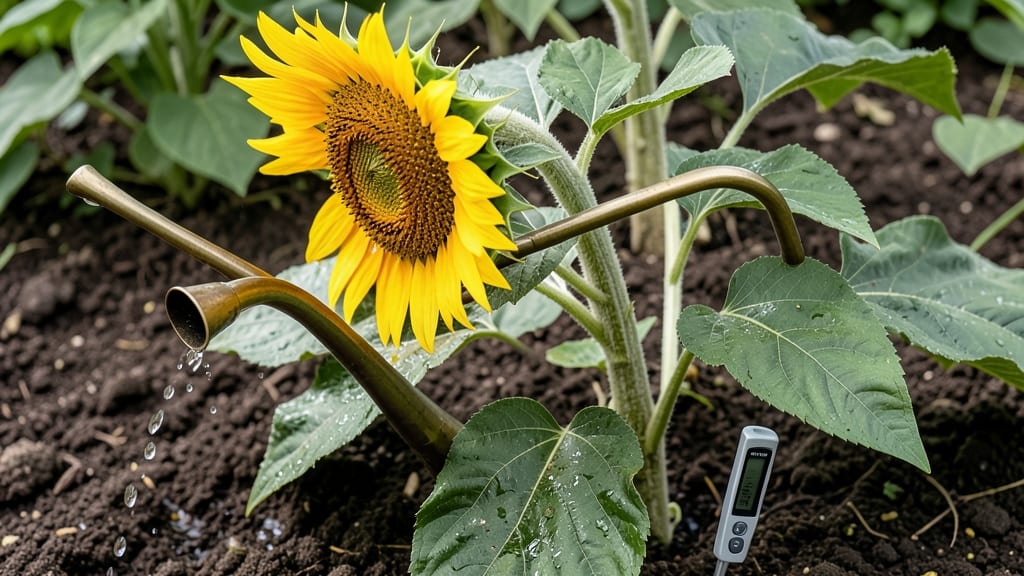
Growing sunflowers with the right water needs ensures those towering 🌻 stalks thrive from seedling to harvest.
Sunflowers may tower over your garden with their striking beauty, but their deep roots demand a precise watering strategy—too little and they wilt, too much and they rot. Mastering their hydration needs is the secret to growing sunflowers that reach their full potential.
Most gardeners assume sunflowers are low-maintenance when it comes to water, but their rapid growth and large leaves mean they actually need consistent moisture. Skipping watering sessions can stunt their height, while overwatering leads to weak stems and disease.
In this guide, I’ll break down the exact watering schedule by growth stage, how to spot signs of stress, and seasonal adjustments to keep your sunflowers strong and healthy all summer long.
How much water do sunflowers need weekly for optimal growth?
Sunflowers thrive when their water needs align with their growth stages. As a deep-rooted annual, they demand consistent moisture but hate soggy soil. Understanding their hydration cycle—from seedling to maturity—ensures your sunflowers grow tall and strong.
In my experience, the key is balancing frequency and depth, especially during their rapid growth phases.
Young sunflowers need frequent but shallow watering to establish roots, while mature plants prefer deep, infrequent soaks. The soil moisture should stay consistently damp but never waterlogged. I’ve learned that climate adjustments are crucial—drought-prone areas need more water, while humid regions require careful monitoring to avoid fungal issues.
Let’s break down the exact watering schedule for each stage.
🌱 Seedling Stage (0-4 weeks): Water lightly every 2-3 days, keeping soil moist but not soggy. Overwatering at this stage can cause rot before roots develop. I use a spray bottle for delicate seedlings, ensuring the top inch of soil stays damp. This mimics natural rainfall and encourages strong root growth.
🌼 Vegetative Growth (4-8 weeks): Increase watering to every 3-4 days, providing 1 inch of water per week. This stage is critical for stem elongation. I water deeply in the morning to reduce evaporation and fungal risks. Mulching around the base helps retain moisture and keeps roots cool.
🌻 Flowering Stage (8-12 weeks): This is the most critical phase for water needs. Sunflowers need 1.5 inches of water weekly, delivered every 2-3 days. I’ve noticed that deep watering at the base encourages stronger stems and larger blooms. During droughts, I increase frequency to daily watering in the early morning to prevent wilting. In humid climates, I reduce water slightly to avoid powdery mildew.
If you’re growing sunflowers in containers, they’ll need water every 2-3 days due to faster soil drying. I’ve found that self-watering pots help maintain consistent moisture. For in-ground plants, focus on watering at the root zone rather than the leaves to minimize disease risk.
A soaker hose or drip irrigation system works wonders for even distribution.
🌾 Maturity Stage (12+ weeks): Once sunflowers stop blooming, reduce watering to every 5-7 days. The goal is to let the soil dry slightly between waterings to prevent rot. I’ve seen mature sunflowers thrive with 1 inch of water weekly, especially in well-draining soil. Overwatering at this stage can lead to hollow stems or premature seed drop.
For drought-prone areas, I recommend installing mulch rings around the base to retain moisture. In humid climates, improve airflow by spacing plants 12-18 inches apart and avoiding overhead watering. Sunflowers are surprisingly resilient, but their water needs must adapt to your local conditions for the best results.
Pro tip: Stick your finger 2 inches into the soil. If it feels dry, it’s time to water. If it’s still moist, wait another day. This simple check saves me from both underwatering and overwatering mistakes.
With the right watering schedule, your sunflowers will reward you with towering stems and vibrant blooms all season long. 🌻
Sunflower watering schedule: when and how to hydrate for maximum height
Sunflowers thrive on consistency, but their deep taproots need more than just occasional drinks. A well-timed watering schedule keeps them reaching for the sky while preventing hollow stems or leaf drop. The key? Morning hydration and deep soaks that mimic natural rainfall patterns.
Your sunflowers' water needs shift with their growth stages. Seedlings crave moist but not soggy soil, while mature plants with flowering buds demand steady moisture. Even the tools you use—like drip irrigation or soaker hoses—can make all the difference in preventing waste and disease.
For container-grown sunflowers, the rules change slightly. Smaller pots dry out faster, so check soil moisture daily in summer. A self-watering planter can save time and prevent root rot from overzealous watering.
Watch for wilting leaves or yellowing stems—these are red flags. Wilting in the morning? Your sunflower is thirsty. Yellowing leaves with crisp edges? You’re overwatering. The goal is consistent moisture, not soggy soil or bone-dry cracks.
Pro tip: Use a moisture meter for precision. Aim to keep soil in the 60-70% moisture range during active growth. With this schedule, your sunflowers will grow taller, straighter, and more resilient—ready to bloom like champions. 🌻