
Watering
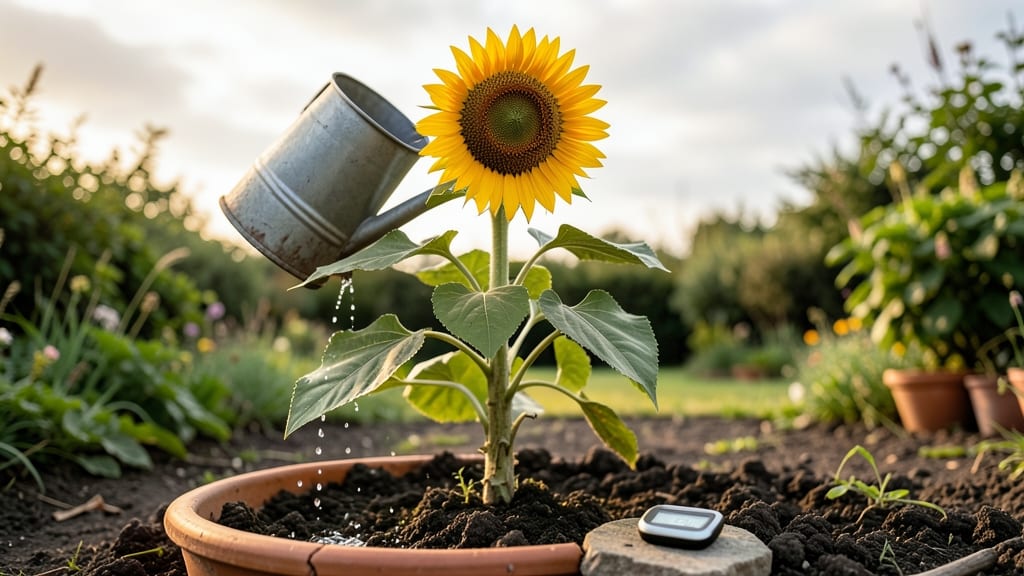
Watering sunflower plants the right way is the secret to growing towering 🌻 stalks that don’t flop like a soggy noodle in a storm.
Sunflowers are nature’s skyscrapers—but without the right watering routine, they’ll wilt or lean so hard they snap. Too little water and they bolt early; too much and you’re left with a mushy stem that can’t support its own weight. The key? Deep, consistent moisture that strengthens roots without drowning them.
Most gardeners guess at watering schedules, but sunflowers need a precise approach—especially when they’re racing toward the sky. Whether you’re dealing with seedlings, budding blooms, or mature stalks, the timing and depth of watering make all the difference between a sturdy giant and a sad, bent shadow of its potential.
In this guide, I’ll break down the exact watering schedule by growth stage, the best times to hydrate, and how to avoid the two biggest mistakes that turn sunflowers into floppy failures. Ready to grow sunflowers that reach for the clouds? Let’s dive in.
How often to water sunflowers for maximum height and stability
Sunflowers thrive on consistency, but their watering needs change dramatically from seedling to full bloom. Too much water weakens stems, while too little stunts growth—both lead to floppy, sad sunflowers that can’t reach their towering potential.
The key? A science-backed schedule that matches their growth stage and soil type. Let’s break down exactly how often to water sunflowers at each phase, plus visual cues to keep your giants standing tall.
First, understand that sunflowers have deep taproots that need moisture at least 12 inches down in the soil. Surface watering tricks them into growing shallow roots, which can’t support their 10+ foot stature.
Your goal is to encourage roots to dive deep while keeping the topsoil slightly dry to prevent fungal diseases. Start by testing your soil’s drainage—if water pools after 30 minutes, you’re overwatering already.
| Growth Stage | Watering Frequency | Depth per Session | Soil Check | Key Visual Cues |
|---|---|---|---|---|
| Seedling (0-4 weeks) | Every 2-3 days | 1-2 inches | Top 1 inch dry | Leaves slightly wilted by midday |
| Vegetative (4-8 weeks) | Every 3-5 days | 3-4 inches | Top 2 inches dry | Stems firm, no drooping |
| Flowering (8-12 weeks) | Every 5-7 days | 6+ inches | Top 3 inches dry | Bud turns yellow at base |
| Maturity (12+ weeks) | Every 7-10 days | 8+ inches | Top 4 inches dry | Seed heads firm, no wilting |
| Clay Soil Adjustment | Reduce by 25% | Same depth | Wait 48 hours | Surface cracks appear |
| Sandy Soil Adjustment | Increase by 30% | Add 2 inches | Wait 24 hours | Water runs through quickly |
For seedlings, focus on light but frequent watering—think of them like thirsty babies. Use a spray bottle or gentle stream to avoid dislodging tiny seeds. The soil should stay consistently moist but never soggy.
A good test: Stick your finger 1 inch deep; if it feels dry, it’s time to water. Overwatering at this stage causes damping off, a fungal disease that turns seedlings into mush overnight.
When sunflowers hit the vegetative stage (4-8 weeks), switch to deep soaks every 3-5 days. This is where you’ll see their rapid vertical growth—and where many gardeners make the fatal mistake of watering lightly.
Use a soaker hose or drip irrigation to deliver water slowly and deeply, encouraging those crucial taproots. Aim for 1-2 gallons per plant per session. Watch for yellowing lower leaves, which signals underwatering or poor drainage.
During flowering (8-12 weeks), reduce frequency but increase depth. Sunflowers need 6+ inches of moisture per session to support their heavy blooms. Water in the early morning to prevent fungal diseases like powdery mildew, which thrives in damp petals.
If you notice buds drooping or wilting by midday, you’re underwatering—adjust to every 5 days max. Pro tip: Mulch with straw or wood chips to lock in moisture and keep roots cool.
At
Deep soak techniques to prevent sunflower flopping and bolting
Sunflowers need deep, consistent watering to develop strong roots that support their towering stems. Shallow watering creates weak stems that flop over under their own weight, while inconsistent moisture triggers bolting—when plants shoot up too fast but stay spindly.
The key? Watering deeply and infrequently to encourage deep root growth while keeping the soil evenly moist.
I’ve found that drip irrigation or soaker hoses work best because they deliver water directly to the root zone without wetting the foliage (which reduces fungal risks). Surface watering with a hose or sprinkler can lead to uneven moisture, causing stems to weaken at the base.
Let’s break down the exact steps for perfect deep-soak watering.
For container-grown sunflowers, the rules change slightly. Smaller pots dry out faster, so I water every 2-3 days and use a self-watering planter if possible. The key is to never let the soil dry out completely, as this causes sudden wilting and weakens stems.
One pro tip I swear by? Stake tall varieties early (like ‘Mammoth’ or ‘Russian Giant’) and water deeply around the stakes to encourage roots to grow toward them. This creates a natural support system as the plant matures.
Pair this with balanced fertilizer (5-10-10) every 4-6 weeks, and you’ll have sunflowers that reach for the sky without toppling over.
Remember: Consistency is everything. Sunflowers hate moisture swings—too much water weakens roots, while too little causes stems to bolt prematurely. Stick to this deep-soak routine, and you’ll grow sunflowers that stand proud and tall, ready to take photos with. 🌻