
Flowers
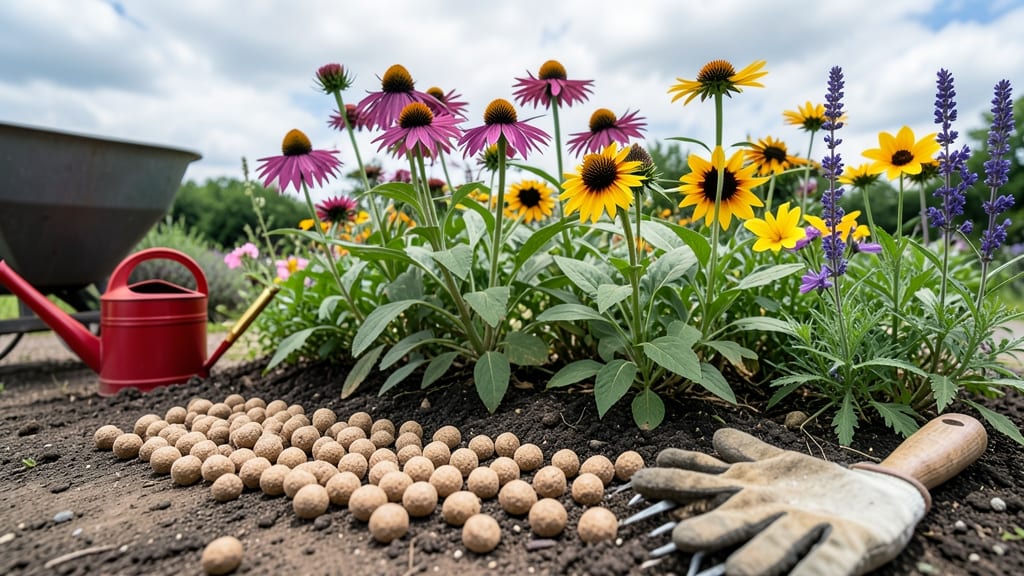
To fertilize flower beds at the right time means the difference between a showstopping bloom and a sad, half-hearted display 🌸 — and most gardeners get the timing wrong.
Picture this: you’ve just planted your dream flower bed, only to watch it limp along with pale leaves and sparse blooms. The problem? You fertilized at the wrong moment, either too early when roots weren’t ready or too late when the season was winding down.
Timing isn’t just about when you feed your flowers—it’s about syncing with their natural growth cycles, soil conditions, and even your local climate.
In this guide, I’ll break down the exact seasonal windows for fertilizing flower beds, from the first feed of spring to the final touch in fall, plus how to read your plants’ signals when they’re hungry.
You’ll also learn the three mistakes that ruin flower beds faster than a summer drought—and how to avoid them.
By the end, you’ll know not just when to fertilize, but how much, what type, and even how to tweak your schedule for your hardiness zone. Let’s turn those “meh” blooms into a garden that turns heads.
Best seasonal times to fertilize flower beds for maximum blooms
Timing your flower bed fertilization is just as important as choosing the right fertilizer. The wrong timing can lead to weak growth, poor blooms, or even plant stress. By fertilizing at the right seasonal windows, you’ll encourage strong root development, vibrant foliage, and abundant flowers.
Let’s break down the best times to feed your flower beds by season—and how your climate zone affects the schedule.
Most gardeners focus on spring and summer, but fall fertilization can set your plants up for next year’s success. For example, spring fertilization kickstarts growth after winter dormancy, while summer feeds sustain blooms.
Meanwhile, fall applications (in mild climates) can strengthen roots before winter. Adjusting for your USDA hardiness zone ensures you’re not fertilizing too early or too late for your local growing season.
| Season | Best Fertilization Time | Purpose | Climate Zone Adjustments | Pro Tips |
|---|---|---|---|---|
| Spring | Early (March-April) | Root growth, new foliage | Zone 3-6: Wait until soil warms (50°F+). Zone 7-10: Fertilize earlier (Feb-March). | Use balanced fertilizer (10-10-10) when leaves emerge. |
| Spring | Mid (May-June) | Bloom stimulation | Zone 3-5: Delay until after last frost. Zone 8-10: Light feed in April. | Switch to phosphorus-heavy (5-10-10) for flowering. |
| Summer | Early (June-July) | Maintain blooms, prevent burnout | Zone 1-4: Light feed in July. Zone 9-11: Reduce in peak heat. | Use slow-release granules to avoid salt buildup. |
| Fall | Early (September-October) | Root strengthening, fall blooms | Zone 3-6: Fertilize by mid-Sept. Zone 7-10: Skip unless planting fall flowers. | Avoid fertilizing chrysanthemums after mid-Sept in cold zones. |
| Winter | None | Dormant period | Zone 1-5: No fertilization. Zone 8-10: Light feed in Dec for evergreens. | Focus on soil prep instead (compost, mulch). |
Spring is the most critical time to fertilize, as plants wake up from dormancy and need nutrients to jumpstart growth. In cool climates (Zones 3-6), wait until the soil reaches 50°F (10°C) before applying fertilizer.
For warm climates (Zones 7-10), you can fertilize as early as February to align with the longer growing season. Always choose a balanced fertilizer (10-10-10) for early spring to encourage overall plant health.
Mid-spring (May-June) is ideal for a phosphorus-rich fertilizer (5-10-10) to promote flowering. This timing ensures your plants have the nutrients they need to produce vibrant blooms without overloading on nitrogen, which can lead to lush foliage but fewer flowers.
In hot climates, apply fertilizer in the early morning or evening to prevent salt burn from high temperatures.
Summer fertilization should be light and strategic. Over-fertilizing in summer can stress plants, especially in high-heat zones (Zones 8-11). Use a slow-release granular fertilizer every 6-8 weeks to maintain blooms without shocking the roots.
Water thoroughly after applying to help nutrients absorb evenly. Avoid fertilizing during peak heat (10 AM–4 PM), as this can cause leaf scorch.
Fall fertilization is often overlooked, but it’s key for perennial flowers and plants that bloom in early spring. In mild climates (Zones 7-10), a light feeding in September can encourage fall blooms and strengthen roots.
However, in cold climates (Zones 3-6), stop fertilizing by mid-September to allow plants to harden off before winter. Focus instead on adding compost to improve soil structure for next year.
Winter is a
How to tell when your flower beds need fertilizer (signs & soil tests)
Your flower beds might be silently screaming for help—yet many gardeners overlook the subtle nutrient deficiency signs until it's too late. Yellowing leaves, stunted growth, or fewer blooms than usual aren't just bad luck; they're your plants' way of saying, "Feed me!"
Before reaching for that fertilizer bag, learn to read your plants and soil like a pro.
Don't guess whether your flower beds need fertilizer—your plants will show you. Visual cues like pale foliage, weak stems, or buds that refuse to open all signal it's time to replenish nutrients.
Pair these observations with a simple DIY soil test to pinpoint exactly what your garden is missing. With these tools, you'll fertilize only when and what your flowers truly need.
When Your Flower Beds Need Fertilizer
- Pale yellow leaves = Nitrogen deficiency
- Reddish-purple stems = Phosphorus shortage
- Yellow leaf edges = Potassium lack
- Stunted growth = Micronutrient deficiency
- Fewer blooms = Overall nutrient imbalance
- Test soil pH (ideal: 6.0-7.0 for most flowers)
- Apply balanced fertilizer (10-10-10 NPK ratio)
- Use slow-release granules for steady nutrients
- Avoid fertilizing dormant plants (winter/early spring)
- Water deeply after fertilizing to prevent root burn
Start with a DIY soil test using a simple kit or household items like vinegar (for chalky soil) or baking soda (for acidic soil). A soil pH test reveals whether your garden is too acidic or alkaline—both can block nutrient absorption.
For example, azaleas thrive in acidic soil (pH 4.5-5.5), while roses prefer neutral soil (pH 6.0-7.0). Adjust with lime or sulfur before fertilizing.
Pay close attention to new growth patterns. If your annual flowers like marigolds or petunias show slow leaf production or weak stems, they’re begging for nitrogen. Meanwhile, perennials like daylilies might need phosphorus for root strength. Bloom-heavy plants (e.g., impatiens) often need potassium to support vibrant flowers.
Timing matters too! Fertilize in early spring (March-April) to kickstart growth, then again in mid-summer (July-August) to prolong blooms. Avoid fertilizing in fall unless you're planting cool-season flowers like pansies. Always water before and after applying fertilizer to protect delicate roots.
Remember: Healthy soil = happy plants. If your flower beds show multiple deficiency signs, consider adding compost or organic matter to improve soil structure before reaching for synthetic fertilizers. A little prevention goes a long way toward longer-lasting blooms and stronger stems all season long. 🌸