
Plants
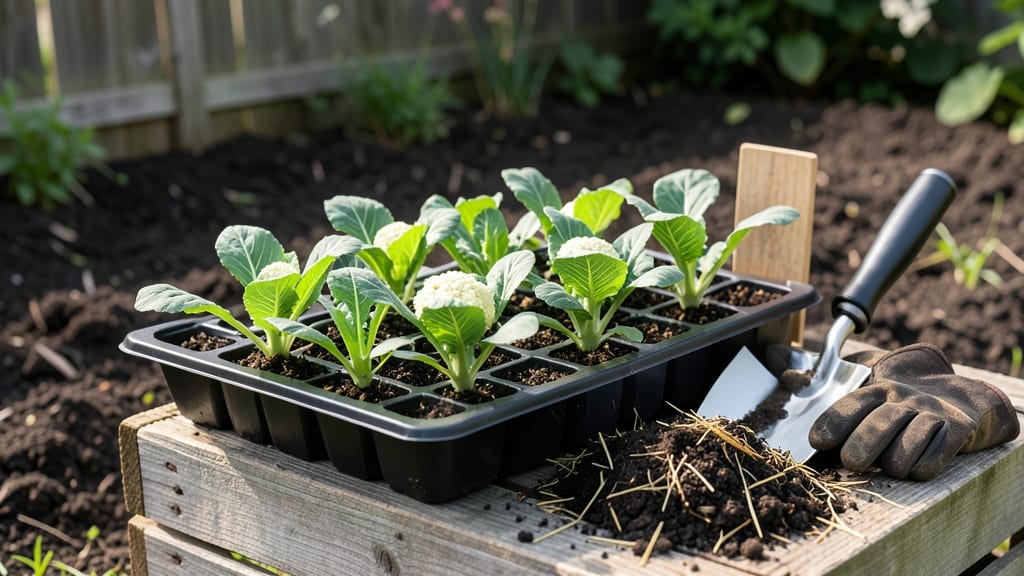
To plant cauliflower in NC, aim for February-March or August-September—timing matters because a late frost can wipe out your crop before it even forms a head.
North Carolina’s diverse climate means cauliflower planting times can vary dramatically between the mountains, piedmont, and coastal regions—but timing it right is the key to avoiding frost damage and maximizing your harvest.
Spring plantings need to beat the last frost (usually mid-March in the piedmont, later in the mountains), while fall crops must be in the ground 8-10 weeks before the first frost hits—often by early September for coastal areas.
In this guide, I’ll break down the exact frost-free windows by county, share tricks for extending your growing season with row covers, and recommend the fastest-maturing varieties for NC’s short seasons.
NC cauliflower planting dates by county: frost-free zones & optimal timing
North Carolina’s four distinct frost-free zones create wildly different planting windows for cauliflower. In the cool mountain regions, you can start as early as late February, while coastal gardeners must wait until mid-March to avoid frost damage.
Understanding your USDA zone and local last-frost averages is critical—cauliflower heads won’t tolerate temperatures below 40°F.
Spring planting is ideal for early-maturing varieties, giving you harvests by June before summer heat sets in. Fall planting, however, often yields better results in NC’s climate, with August-September sowing producing heads in October-November.
The key is working 8-10 weeks before first frost, which varies dramatically across the state.
Mountain counties like Haywood and Henderson (Zone 6b-7a) have last frost dates around March 15, while Piedmont counties such as Durham and Wake (Zone 7b-8a) average April 1. Coastal areas like New Hanover and Craven (Zone 8a-8b) often see their last frost by March 20, but Sandhills regions like Richmond and Moore can be 10 days earlier.
For spring planting, I recommend starting seeds indoors 6-8 weeks before your local last frost date. In Mountain counties, that means mid-January sowing, while Coastal Plain gardeners should begin late February.
Transplant seedlings 1-2 weeks before the last expected frost to give them time to establish roots without competing with weeds.
Fall planting offers longer daylight hours and cooler temperatures, which cauliflower loves.
Aim to transplant 8-10 weeks before first frostlate July to early August in most of NC. Purple varieties like ‘Graffiti’ handle heat slightly better than white types, making them ideal for Sandhills and Coastal Plain gardens where summer lingers longer.
Microclimates matter! Even within a county, low-lying areas may frost 2-3 weeks later than hilltops. I always check local weather stations (like those at NC State Extension offices) for 3-year averages—they’re more reliable than USDA zone maps alone.
For example, Asheville’s last frost can range from March 5 to April 10 depending on the year.
Pro tip: Use floating row covers to extend your spring planting by 2-3 weeks in colder zones. They protect young plants from light frosts (28-32°F) while still allowing sunlight through.
In Zone 7a Mountains, this can push your first transplant date back to early February—just cover them nightly until danger of frost passes.
Remember, cauliflower needs consistent moisture—especially during head formation. In dry Sandhills soils, I water daily during summer to prevent bitter, loose heads. Mulch with straw or grass
How to adjust cauliflower planting for NC’s microclimates & soil conditions
North Carolina’s microclimates can turn a cauliflower garden into a gamble if you don’t adjust your approach. The mountains stay cooler longer, while the coastal plain bakes earlier—both demand different strategies.
I’ve learned that soil type and frost timing are just as critical as planting dates, especially when dealing with NC’s unpredictable spring weather.
One of my biggest mistakes was treating all of NC like the piedmont. In Asheville, I planted too early and lost seedlings to late frosts, while in Wilmington, my fall crop bolted before heads formed.
The key? Extending the season with protective covers and amending heavy clay or sandy soils to retain moisture. Let’s break down how to adapt your planting for NC’s unique challenges.
For heavy clay soils common in the piedmont, I swear by raising beds or mixing in compost and sand to improve drainage. Last year, my cauliflower heads in Raleigh split because water pooled around the base.
Amending with aged manure and vermiculite solved the issue—now my plants thrive even in USDA Zone 7b. In contrast, sandy soils in the coastal plain dry out fast, so I mulch heavily with straw and water deeply twice weekly during dry spells.
When it comes to extending the growing season, I’ve had the most success with floating row covers in early spring. These lightweight fabrics trap heat and protect seedlings from 28°F frosts, which are common in March across NC.
For fall planting, I use cold frames to push harvests into November. In Ashe County, this lets me grow cauliflower until the first frost, which often hits around October 31.
Don’t overlook succession planting—it’s my secret weapon for beating NC’s short growing windows. Instead of one big planting, I stagger seeds every 2 weeks from February to April for spring and August to September for fall.
This ensures a steady harvest and reduces the risk of losing everything to unpredictable weather. For example, my ‘Snowball Y Improved’ plants mature in 70 days, so I time the last spring planting to finish before June’s heat sets in.
One final tip: Monitor soil temperatures with a thermometer. Cauliflower seeds won’t germinate well below 45°F, and seedlings can bolt prematurely if soil temps exceed 85°F. In southern NC, I’ve had to delay spring plantings until mid-March to avoid this.
With these adjustments, you’ll turn NC’s challenges into a reliable cauliflower harvest—no matter where you garden.