
Planting
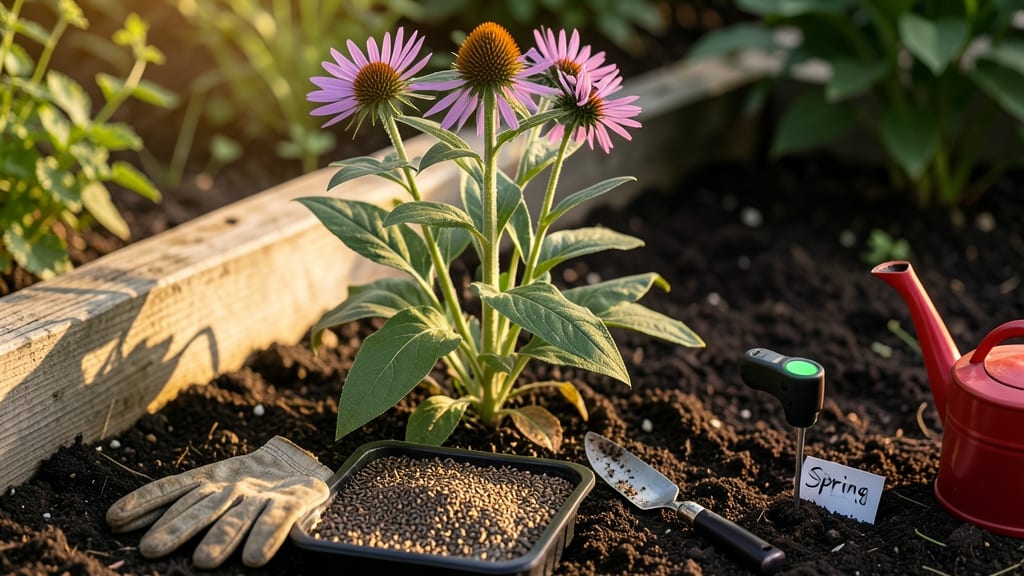
To plant coneflower seeds at the perfect time for bold blooms and strong roots, aim for early spring or late summer—just before your first frost in Zone 6a or warmer.
Picture this: you’ve waited all winter for spring color, and your coneflower seeds arrive in the mail. But if you plant them too early, they’ll rot in cold soil.
Too late, and you’ll miss the 60-90-day window before summer heat sets in. The right timing turns those tiny seeds into 3-foot-tall pollinator magnets.
Your hardiness zone dictates the exact month—think April-May for spring planting or late August for fall—but soil temperature matters just as much. We’ll break down how to read frost dates, adjust for your microclimate, and even troubleshoot slow germination in cooler areas.
By the end, you’ll know not just when to plant, but how to space those seeds 12 inches apart, prep the soil for well-draining success, and keep your coneflowers blooming from July through September—no guesswork, just show-stopping results.
Best planting months for coneflower seeds by USDA hardiness zone
Planting coneflower seeds at the right time ensures strong root development and vibrant blooms. Since coneflowers (Echinacea) thrive in full sun and well-draining soil, timing depends on your USDA hardiness zone.
In cooler zones (3-5), aim for late spring planting, while warmer zones (6-9) offer both spring and fall opportunities. Let’s break it down by zone to help you choose the perfect window.
For direct sowing, most gardeners prefer planting after the last frost date when soil temperatures reach 55-65°F. Transplanting young seedlings works too, but it requires careful timing to avoid heat stress or early frost.
Varieties like Echinacea purpurea (purple coneflower) and E. paradoxa (yellow coneflower) adapt well to staggered planting, while E. pallida (pale purple coneflower) prefers cooler soil.
Here’s your zone-by-zone planting guide, including exact months and whether to sow directly or transplant:
In Zones 3-4, focus on late spring planting to avoid early frost damage. These zones have shorter growing seasons, so transplanting young seedlings (started indoors) gives them a head start.
For Zones 5-6, both spring and fall planting work—fall-sown seeds benefit from cooler temperatures and establish roots before winter.
Warmer zones (7-10) offer flexibility. In Zones 7-8, you can plant as early as February for spring blooms or August for fall color. Zone 9-10 gardeners can even plant in July for late-season blooms. Just ensure soil stays moist during germination, as dry spells can delay sprouting.
Pro tip: If you’re unsure about frost dates, use biodegradable seed starter pots for transplants. This method lets you move seedlings directly into the ground without disturbing roots. For direct sowing, mark your seed rows with stakes to avoid disturbing them during watering.
For Echinacea purpurea, which is the most cold-hardy, prioritize spring planting in cooler zones. Meanwhile, E. paradoxa (yellow coneflower) thrives in warmer climates and can handle fall planting with ease. Mixing varieties in your garden extends the blooming season from early summer to frost.
Remember, soil temperature matters more than air temperature. Use a soil thermometer to confirm it’s 55°F or warmer before planting. If your soil is too cold, germination slows or fails entirely. In Zones 3-5, wait until the ground warms up—even if the air feels spring-like.
Once your seeds sprout, thin seedlings to 12-18 inches apart to prevent overcrowding. Coneflowers are drought-tolerant once established, but young plants need consistent moisture to avoid stress. Mulch around the base to retain soil moisture and suppress weeds.
With the right timing, your coneflowers will reward you with bold blooms from midsummer to fall, attracting butterflies and bees while adding long-lasting color to your garden. Happy planting! 🌼
How climate and soil conditions affect coneflower seed germination timing
Coneflower seeds (Echinacea) thrive when planted at the right time, but soil temperature and climate conditions can shift your ideal planting window by weeks—or even months.
In cooler zones, a late frost or chilly soil can delay germination for 4-6 weeks, while warmer regions may require fall planting to avoid summer heat stress. Understanding these factors ensures your seeds sprout consistently and grow into robust plants.
Most coneflower seeds need soil temperatures between 55°F and 65°F to germinate successfully. Below 50°F, germination slows dramatically, and seeds may rot before sprouting. In USDA Zones 3-5, this often means waiting until late May or even June, while Zones 6-9 can start as early as March or April.
Microclimates—like urban heat islands or sheltered garden nooks—can also create localized planting windows that differ from regional averages.
⚠️ callout-warning ⚠️
Cold soil (<50°F) causes coneflower seeds to rot or fail before sprouting. Use a soil thermometer to confirm 55-65°F before planting. In Zone 4 or colder, wait until after Memorial Day to minimize frost risk. For fall planting, aim for 6-8 weeks before first frost—typically late August to early September.
Moisture plays a critical role too. Coneflower seeds need consistent moisture to germinate, but waterlogged soil can suffocate them. In dry climates, pre-soak seeds for 12-24 hours before planting to kickstart germination. Mulch lightly with straw after sowing to retain moisture without compacting the soil.
If your area experiences flash droughts (common in the Southwest), consider using a drip irrigation system to maintain even moisture levels.
Regional microclimates can drastically alter your planting timeline. For example, a south-facing slope in Zone 5 may warm up 2-3 weeks earlier than a north-facing garden bed, allowing earlier planting.
Similarly, coastal areas with moderating ocean breezes often have longer growing seasons than inland zones. Always monitor your specific garden’s conditions—your neighbor’s perfect timing might not work for you!
Troubleshooting slow germination in cool zones starts with warmth and patience. If seeds take longer than 3-4 weeks to sprout, check soil temperature again. A black plastic mulch or seedling heat mat can raise soil temps by 5-10°F, speeding up germination.
Avoid the temptation to replant—coneflower seeds can lie dormant for months, waiting for ideal conditions. Once sprouted, thin seedlings to 12-18 inches apart to prevent competition and ensure strong, healthy plants.
By aligning your planting with soil temperature thresholds, moisture needs, and local climate patterns, you’ll give your coneflower seeds the best chance to thrive. Pay attention to these cues, and you’ll enjoy bold blooms from early summer through fall—year after year. Happy gardening! 🌼