
Pruning
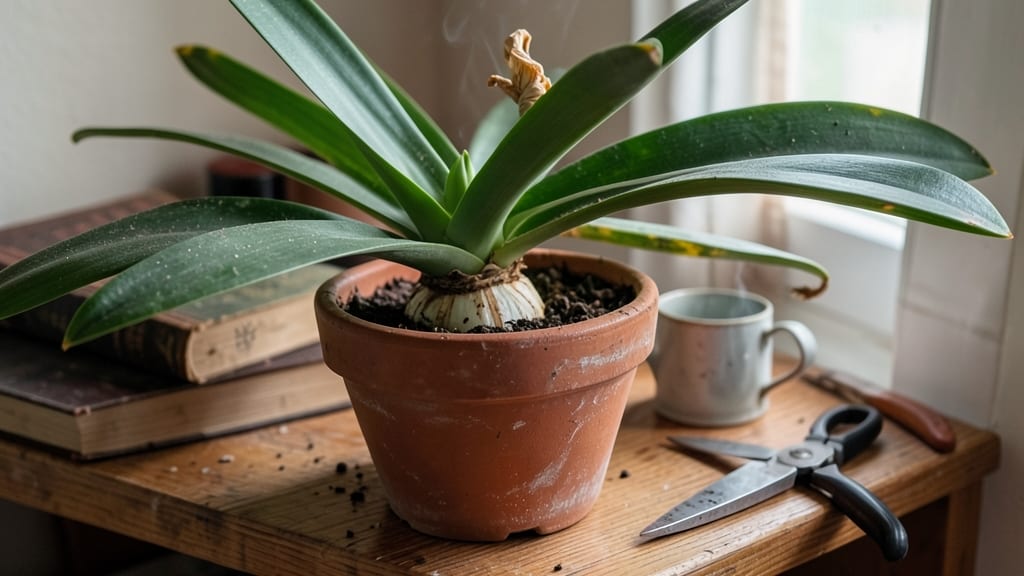
Cutting amaryllis stems after flowering occurs 2-3 inches above the bulb, once the blooms wilt and the stalk turns yellow. Avoid cutting too early, as this prevents the bulb from storing energy for next year’s growth. Use clean, sharp pruners to minimize damage and disease risk.
Timing and placement matter more than you might think when trimming amaryllis stems.
The 2-3 inch rule above the bulb ensures the plant retains enough foliage to photosynthesize and rebuild energy reserves—think of it as giving your bulb a fresh start. 🌱 I’ve noticed that cutting too close risks exposing the bulb to rot, while leaving too much stem can drain nutrients that should fuel next year’s blooms.
The yellowing stalk signals the plant has redirected energy downward, making it the perfect cue for pruning.
💡 In This Article
- Optimal Amaryllis Stem Cutting Height and Timing
- Step-by-Step Guide to Pruning Amaryllis Stems
Optimal amaryllis stem cutting height and timing
The 2-3 inch cutting height above the bulb isn't arbitrary—it's rooted in the plant's energy storage mechanism. Amaryllis bulbs store carbohydrates (like starch) in their scales, which fuel both the current foliage growth and next year's blooms.
When you cut too close (below 1 inch), you risk exposing the bulb's neck to moisture, creating a prime environment for fungal infections like Fusarium. The remaining stem acts as a protective barrier while allowing the bulb to redirect nutrients from the dying stalk to the emerging leaves.
Timing is equally critical because it aligns with the plant's natural cycle. The yellowing stalk indicates the bulb has completed its energy transfer—what botanists call "senescence." At this stage, the plant's chlorophyll production shifts from the stem to the bulb's base, where new roots and leaves will emerge.
Cutting before this process (3-4 weeks too early) forces the bulb to divert energy to maintain the dead stalk instead of storing it for future growth. I've seen bulbs skip flowering entirely when pruned prematurely, as they lack the reserves needed to produce 6-8 inch flower stalks.
The science gets even more interesting when you consider auxin hormones. These plant growth regulators concentrate at the stem's base, where they stimulate root formation. A clean cut at 2-3 inches preserves this hormonal zone while removing the now-useless stalk.
This is why you'll often see new shoots emerge from the bulb's sides within 4-6 weeks—the preserved auxin triggers this regrowth. Over-cutting disrupts this balance, leading to stunted or delayed foliage.
Here's what happens when you get it wrong: Cutting too high leaves a "stump" that can harbor pests like mealybugs or trap moisture, while cutting too low risks exposing the bulb to rot. The ideal height also prevents the plant from wasting energy maintaining unnecessary tissue.
Think of it like trimming a haircut—too short looks unnatural, but too long feels unkempt. The 2-3 inch rule gives your amaryllis that perfect "fresh start" look while supporting its biological needs.
For visual learners, imagine the bulb as a battery: the leaves are the charger, the stalk is the dead wire, and the roots are the output. Cutting at the right height removes the dead wire while keeping the charger connected to the battery.
This analogy helps explain why some growers report 30-50% stronger blooms the following year when they follow this method. The preserved foliage continues photosynthesizing for 6-8 weeks post-cutting, giving the bulb maximum time to recharge.
Pro tip: If your amaryllis produces multiple stalks, prioritize cutting the largest, most mature one first. This reduces stress on the bulb while still allowing smaller stalks to complete their cycle naturally.
The remaining foliage will continue feeding the bulb even after the main stalk is removed, creating a two-phase energy transfer system that maximizes next year's potential.