
Flowers
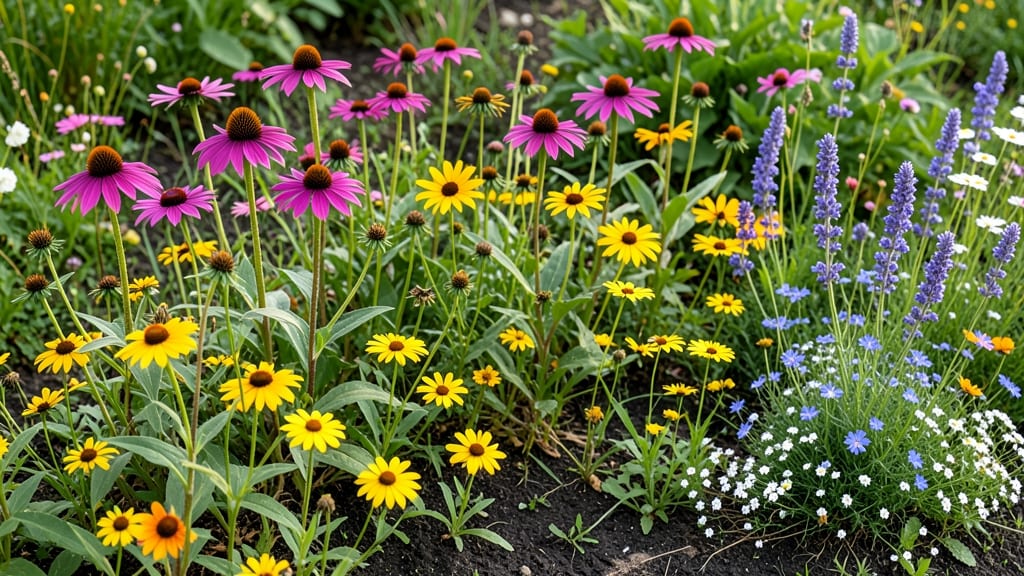
Wildflowers are either annuals or perennials, and knowing the difference can transform your garden from a fleeting showstopper into a year-round masterpiece.
Picture this: you’ve just scattered seeds of 🌼 Black-Eyed Susans and Cosmos, only to watch them vanish after one glorious summer. That’s the annual life cycle in action—one season of color, then poof.
But swap those for Coneflowers or Bee Balm, and you’ll get blooms that return year after year, proving perennials are the steady workhorses of the wildflower world.
The choice between the two shapes your garden’s future. Annuals deliver quick, vibrant bursts but require replanting, while perennials demand patience upfront for long-term rewards.
Below, I’ll break down the traits of each, share 10 standout wildflowers by lifespan, and reveal how to mix them for a garden that never skips a beat.
Whether you’re a first-time gardener or a seasoned pro, this guide will help you pick the perfect wildflowers for your 6a zone—so you can enjoy their beauty without the guesswork.
How to identify wildflower life cycles: annual vs. perennial traits
Wildflowers come in two main life cycle categories: annuals and perennials. The difference isn't just about how long they live—it affects blooming patterns, seed production, and garden planning. Annuals complete their entire life cycle in one season, while perennials return year after year.
Knowing which is which helps you design gardens that bloom continuously or focus on seasonal bursts of color.
One of the first clues to identify a wildflower's life cycle is its root system. Annuals typically develop shallow roots because they focus energy on rapid growth and seed production.
Perennials, on the other hand, invest in deep, fibrous roots that store nutrients for future seasons. This difference directly impacts their lifespan and resilience.
Blooming patterns also reveal a wildflower's life cycle. Annuals often bloom profusely in their first season to attract pollinators and produce seeds before dying. Perennials may bloom later in the season, sometimes over multiple years, and often have a more staggered flowering period. For example, black-eyed Susans (annual) explode with color in summer, while purple coneflowers (perennial) bloom steadily from mid-summer to fall.
Let's break down the key traits to help you identify annuals vs. perennials in your garden:
| Trait | Annual Wildflowers | Perennial Wildflowers |
|---|---|---|
| Lifespan | One growing season | Multiple years (2+) |
| Root System | Shallow, fibrous | Deep, woody, or tuberous |
| Blooming Pattern | Prodigious, often early | Steady, sometimes staggered |
| Seed Production | High, ensures next generation | Moderate, focuses on survival |
| Growth Rate | Rapid, aggressive | Slower, steady |
| Examples | Cosmos, marigolds, zinnias | Black-eyed Susan, coneflower, bee balm |
Seasonal behavior is another key identifier. Annuals often emerge early in spring, grow quickly, and die back by late fall. Perennials may appear later in the season but return year after year with minimal care.
For instance, sunflowers (annual) grow from seed to bloom in just a few months, while goldenrod (perennial) establishes itself in the first year and blooms reliably for decades.
Seed production habits also differ. Annuals produce thousands of seeds to ensure survival, often releasing them before the plant dies. Perennials produce fewer seeds but focus on storing energy in their roots.
This means annuals like poppies self-seed aggressively, while perennials like lavender rely on established root systems to regenerate each spring.
Understanding these traits helps you plan your garden for maximum impact. If you want instant color, annuals are ideal because they bloom quickly. For low-maintenance beauty, perennials are perfect since they return year after year.
Mixing both creates a garden that thrives season after season, with annuals filling gaps and perennials providing structure.
Pay attention to how wildflowers behave in your climate. Some plants classified as perennials in warmer zones may act like annuals in colder regions due to frost sensitivity.
For example, snapdragons are biennials (a mix of annual and perennial traits) but often die back in harsh winters, requiring reseeding each year in colder climates.
Finally, observe whether wildflowers die back completely in winter or persist as dormant plants. Annuals vanish entirely, while perennials may lose foliage but retain roots. This visual clue alone can save you time when identifying life cycles in your garden.
By mastering these traits, you'll create a wildflower garden that's both beautiful and sustainable. Whether you're planting for seasonal bursts or long-term beauty, knowing the difference between annuals and perennials is your secret weapon for success.
Top 10 wildflowers ranked by lifespan: annuals vs. perennials compared
Deciding between annuals and perennials can transform your garden's long-term beauty. Annuals deliver instant color but fade after one season, while perennials return year after year with minimal effort. Let's explore the top 10 wildflowers ranked by lifespan, so you can choose plants that fit your gardening goals perfectly.
For quick blooms and seasonal variety, annuals like cosmos and zinnia are unbeatable. But if you crave low-maintenance reliability, perennials such as black-eyed Susan and coneflower will reward you with decades of blooms. Understanding these differences helps you design a garden that thrives with year-round interest.
Let's start with the top 5 perennials that deliver multi-year blooms. Black-eyed Susan (Rudbeckia hirta) tops the list with its golden-yellow flowers that bloom from summer to fall. This hardy perennial thrives in full sun and drought conditions, making it perfect for low-maintenance gardens.
Coneflower (Echinacea purpurea) follows closely, offering pink-purple blooms that attract pollinators like bees and butterflies. It's disease-resistant and can live for 5-10 years with proper care. For early spring color, columbine (Aquilegia spp.) provides delicate, nodding flowers in shades of blue, purple, and white.
Now, let's highlight 5 annuals that bring instant seasonal impact. Cosmos (Cosmos bipinnatus) is a favorite with its airy, daisy-like blooms that continue until frost.
It's self-seeding, meaning it may return in subsequent years even as an annual. Zinnia (Zinnia elegans) offers bold, long-lasting flowers in vibrant colors, perfect for cut arrangements.
For wildflower meadows, sunflower (Helianthus annuus) can't be beat—its towering yellow blooms bring joy and feed birds. Even marigolds (Tagetes spp.), though often grown as annuals, may self-seed prolifically.
The key difference? Annuals like these complete their life cycle in one season, while perennials like bee balm (Monarda spp.) return stronger each year.
To maximize your garden's beauty, consider mixing both types. Plant annuals for seasonal pops of color and perennials for long-term structure. This combo ensures your garden stays vibrant from spring to fall