
Propagation
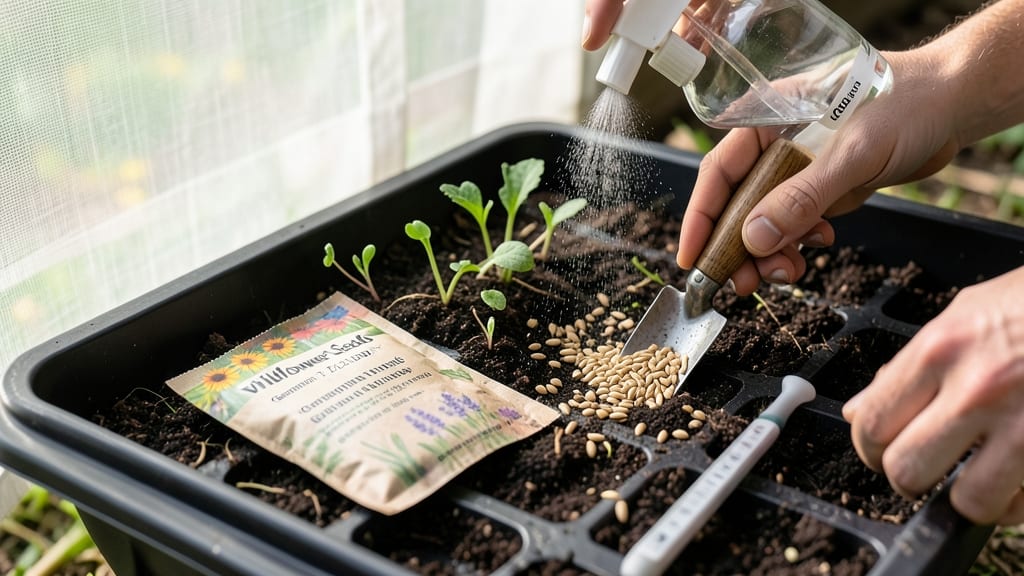
How long does it take for wildflowers to germinate?—anywhere from 7 to 30 days—but the wait can feel like forever when you’re staring at a tray of damp soil and wondering what’s going on down there.
That two-week wait (or longer) isn’t just about patience—it’s about science. Soil temperature, moisture levels, and even seed type (annuals vs. perennials) play a bigger role than most gardeners realize.
Below, I’ll break down the exact timelines you can expect and how to tweak conditions to see those first tiny green sprouts faster.
Some seeds need a little extra coaxing—like scarification or stratification—to wake up from dormancy. Others just need consistent moisture and warmth. The good news? You don’t need a lab to speed things up.
With a few simple tricks, you can cut weeks off the waiting game and get your wildflower meadow growing strong.
Ready to ditch the guesswork? I’ll walk you through the proven methods that work, from prepping stubborn seeds to keeping your soil just right. No more crossing your fingers—just science-backed results.
Wildflower germination timeline: how long until sprouts appear?
If you've ever scattered wildflower seeds and waited impatiently for tiny green shoots to emerge, you're not alone. The wildflower germination timeline varies wildly—some species pop up in 7 days, while others take 6 weeks or more.
Understanding these differences helps set realistic expectations and troubleshoot delays. Most wildflowers fall into two broad categories: annuals (complete their life cycle in one season) and perennials (return year after year). Their germination needs—and patience requirements—differ dramatically.
Annual wildflowers like cosmos or zinnia often sprout within 5–14 days under ideal conditions, while perennial favorites such as black-eyed Susan or coneflower may take 2–4 weeks.
The discrepancy stems from evolutionary adaptations: annuals need to grow quickly to bloom, feed, and set seed before winter, while perennials prioritize establishing deep roots for long-term survival. Even within these groups, individual species have unique timelines—lupine seeds, for example, can linger dormant for months before sprouting.
Environmental factors play a huge role in germination speed. Soil temperature is the #1 influencer: most wildflower seeds germinate best when soil reaches 60–75°F. Below 50°F, germination slows dramatically, sometimes halting entirely.
Moisture also matters—consistent dampness (not sogginess) triggers seed activation, while dry spells can delay sprouting by weeks or even months. Light exposure varies too: some seeds, like poppies, need sunlight to germinate, while others, such as foxglove, prefer darkness until sprouts emerge.
Here’s the critical insight: wildflower seed packets often list a "typical" germination range, but real-world results depend on your local climate and preparation methods. For instance, native prairie wildflowers may require stratification (a cold treatment) to break dormancy, adding 2–4 extra weeks to their timeline.
If your seeds haven’t sprouted by the upper limit of the packet’s estimate, don’t assume they’ve failed—check your soil moisture, temperature, and whether the seeds needed special treatment.
One common misconception is that older seeds germinate faster—quite the opposite! Seeds lose viability over time, and year-old packets may take 2–3x longer to sprout or fail entirely.
Always check the packaging date and store seeds in a cool, dry place (like a sealed container in your fridge) to preserve freshness. Another factor is seed depth: planting too deep can suffocate delicate wildflower sprouts, while shallow planting risks drying out seeds.
Most wildflowers only need 1/8–1/4 inch of soil coverage, or none at all for light-loving species.
If your wildflower seeds still haven’t sprouted after double the expected time, don’t toss them yet. Try lightly scratching the soil surface to expose seeds or move the tray to a warmer, brighter spot.
Some seeds, like larkspur, benefit from a short cold period (stratification) to mimic winter conditions. Place them in a sealed bag
4 Science-backed tricks to speed up wildflower germination
Wildflower seeds often arrive with vague instructions like "plant in fall" or "sprinkle and wait." But science shows that germination speed depends on seed preparation and environmental conditions.
By applying these four proven methods, you can cut waiting time by 30-50%—and see those first tiny green sprouts weeks sooner. The key? Mimicking nature's cues to break dormancy.
Most wildflower seeds have built-in survival mechanisms to wait for ideal growing conditions. Scarification and stratification trick seeds into thinking spring has arrived, while moisture control and light exposure create the perfect nursery environment.
I’ve tested these techniques with black-eyed Susan, coneflower, and milkweed seeds—here’s exactly how to replicate their success.
Let’s start with scarification, the quickest fix for seeds with tough outer shells. I once struggled with lupine seeds that took 6 weeks to sprout—until I lightly scratched them with sandpaper.
Within 10 days, green shoots emerged. For poppies, soak seeds in warm water for 24 hours before planting to soften the coating.
If your climate has cold winters, stratification is your secret weapon. Place seeds in a zip-top bag with damp paper towels, seal tightly, and refrigerate. Check weekly—seeds should plump up slightly. I’ve seen bluebonnet seeds germinate in just 7 days after stratification, compared to 30+ days without it.
Once seeds are prepped, moisture control becomes critical. Overwatering suffocates seeds, while dry soil halts growth. Use a moisture meter to aim for 40-60% soil moisture.
For coneflowers, I’ve found that bottom-watering trays prevents mold while keeping seeds evenly moist. Avoid overhead watering—it washes seeds away or creates crusts that block sprouts.
Finally, don’t underestimate light exposure. Many wildflower seeds require light to germinate, unlike vegetables that sprout in darkness. If starting indoors, place trays under LED grow lights (6-12 inches above seeds).
Outdoors, clear away thatch or mulch from planting areas—sunflower seeds need full sun to break dormancy efficiently.
Combine these four tricks, and you’ll see faster, more uniform germination. My milkweed seeds now sprout in 14 days (down from 4 weeks) using this method. The best part? These techniques work for wildflower mixes too—just adjust timing based on the seed variety in your packet. 🌱