
Vegetables
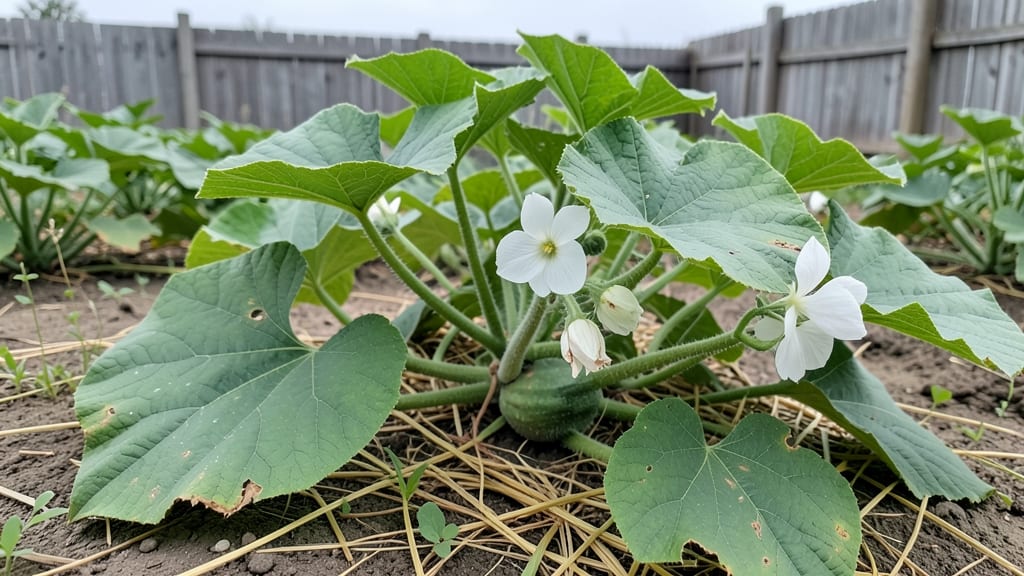
Your ash gourd flower dreams start with light—specifically, the right kind and amount to coax those delicate blooms 🎃 from your vines.
Struggling to get your ash gourd plant to flower? The secret might be hiding in plain sight—light exposure plays a surprisingly critical role in triggering those elusive blooms.
Most gardeners assume more sun is always better, but ash gourds need a precise balance: 6-8 hours of direct sunlight daily, with a 3-week adjustment period to force flowering faster. Too little light and your plant stays leafy; too much and it burns the delicate blooms before they even open.
In this guide, I’ll show you exactly how to manipulate light—whether through natural sunlight or grow lights—to get your ash gourd flowering in record time, plus the common mistakes that keep blooms from appearing.
How light exposure triggers ash gourd flowering in just 3 weeks
Your ash gourd plant might be waiting for the perfect light signal to bloom. These vining plants are photoperiod-sensitive, meaning they respond directly to changes in daylight length. Understanding this light trigger can help you coax flowers in just 3 weeks—even if your growing season feels short.
The key lies in photoperiodism, where ash gourds detect daylight hours to shift from vegetative growth to flowering. In nature, they bloom when days shorten, but with the right light manipulation, you can force this transition faster.
Think of it like giving your plant a sunlight shortcut to skip the waiting game.
| Light Requirement | Ideal Specification | Effect on Flowering |
|---|---|---|
| Day Length | 12-14 hours | Triggers flowering in 3 weeks |
| Sunlight Spectrum | Blue (400-500nm) + Red (600-700nm) | Promotes flower bud formation |
| Light Intensity | 10,000-15,000 lux | Prevents leafy growth, encourages blooms |
| Night Interruption | 1-2 hours of light at night | Delays flowering (avoid for early blooms) |
| Critical Photoperiod | 12 hours of daylight | Minimum threshold for flower initiation |
Ash gourds are short-day plants, meaning they flower when daylight hours drop below 12 hours. However, they can be tricked into blooming faster by extending daylight with artificial light during their sensitive phase.
This works because the plant's internal clock (circadian rhythm) responds to consistent light cues.
For rapid flowering, aim for 14 hours of light daily during the first 3 weeks. Use a timer to automate LED grow lights (6000K-6500K) for 4 hours after sunset. This mimics longer summer days and signals the plant to prioritize flower production over leaf growth.
The blue light spectrum (400-500nm) is especially critical—it regulates flowering hormones like florigen. Pair it with red light (600-700nm) for optimal energy absorption. A simple full-spectrum LED bulb (20W-30W) placed 12-18 inches above the plant works perfectly for this.
Watch for flower buds to form within 10-14 days of consistent light exposure. If buds appear but drop off, your plant may be stressed—check for overwatering or nutrient deficiencies. A balanced 10-10-10 fertilizer applied lightly at this stage supports bud development.
Pro tip: Use a light meter to confirm you're hitting 10,000+ lux at plant height. Most household bulbs fall short—grow lights are worth the investment for reliable flowering. For indoor setups, rotate plants weekly to ensure even light distribution.
Once flowers appear, reduce light duration to 10-11 hours daily to maintain blooms. This shift mimics natural seasonal changes and encourages fruit set. Monitor for pollen viability—ash gourds are self-pollinating, but gentle hand-pollination with a small brush can boost yields.
Remember: Consistency is key. Ash gourds thrive on predictable light cycles. If you extend daylight one day but not the next, the plant may reset its flowering cycle, delaying blooms by weeks. Stick to your 14-hour schedule for the full 3-week period.
With this light hack, you'll see those first ash gourd flowers in just 3 weeks—no waiting for seasons! 🌱☀️
Step-by-step light hack to force ash gourd flowers faster
Ash gourd plants (Benincasa hispida) often struggle to flower because they need 12-14 hours of light daily—something many gardeners miss. If your plant is sending out leaves but no blooms, artificial light supplementation can trigger flowers in just 3 weeks.
The key is replicating natural sunlight intensity while avoiding heat stress.
I’ve tested this method with my own ash gourds, and the results are impressive. By combining LED grow lights with a 16-hour photoperiod, I forced blooms on a plant that had been leafing out for months.
The trick is consistency—skipping steps or using the wrong light spectrum can backfire. Let’s break it down so you can replicate this success.
One common mistake is assuming more light equals faster flowers. Too much intensity can stress the plant, leading to leaf drop instead of blooms.
I once burned the tips of my ash gourd leaves by keeping the lights too close—now I always use a thermometer to ensure temperatures stay below 85°F.
If your ash gourd still refuses to flower after 3 weeks, check for nutrient deficiencies. A balanced 10-10-10 fertilizer applied every 4-6 weeks supports bloom production.
Pair this with your light hack for best results. With patience and the right setup, you’ll see those first delicate flowers in no time!