
Blooming
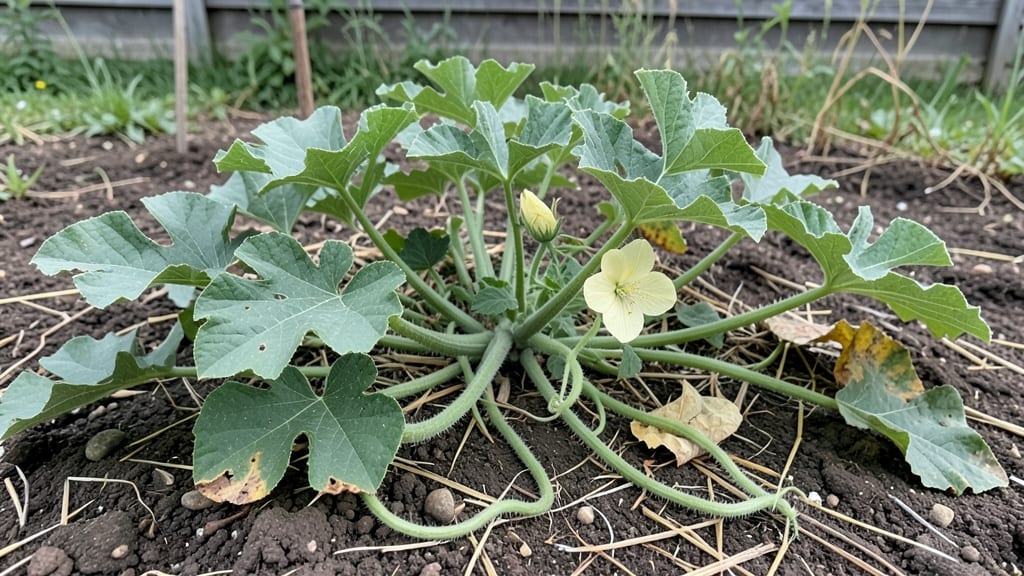
Watermelon plants have flowers as part of their fruiting process, producing both male and female blooms that develop into the fruit. Female flowers grow directly from the vine and bear small, round shapes at their base where melons form.
These delicate blooms aren’t just showy—they’re the foundation of your harvest!
Male flowers appear first, their long stems ending in bright yellow petals that release pollen to fertilize female blooms. 🌸 Once pollinated, those female flowers swell at the base, forming the tiny bumps where your watermelons will grow over 50-90 days, depending on the variety. The key difference?
Female flowers sit directly on the vine with a tiny melon-shaped swelling near the blossom, while males have no fruit potential.
What’s fascinating is how this two-phase system works: male flowers act as pollen producers, while female flowers become the fruit hosts. Without both types thriving, your vine might set fewer melons.
I’ve seen gardeners boost yields by gently shaking vines during morning hours (when flowers are open) to encourage natural pollination—especially helpful in greenhouses where bees are scarce.
💡 In This Article
- Watermelon Flower Types and Their Roles in Fruit Development
- Caring for Watermelon Flowers to Maximize Fruit Production
Watermelon flower types and their roles in fruit development
Watermelon vines produce two distinct flower types that play specialized roles in fruit development. The male flowers appear first, typically 2-3 weeks before female blooms, with slender stems ending in bright yellow, five-petaled blossoms about 1-2 inches wide.
These flowers contain only pollen-producing stamens, designed to fertilize female flowers but incapable of forming fruit themselves. Their primary function is to release clouds of pollen that drift on morning breezes or via insect pollinators like bees.
The female flowers, easily identifiable by their slightly larger size and the small, round swelling at their base, are where the magic happens.
This swelling is the ovary, which will develop into the watermelon after successful pollination. 🌸 What's fascinating is how the vine allocates resources: female flowers require more energy to develop, so plants often produce fewer of them.
The ovary contains thousands of ovules that will become seeds once fertilized by pollen from male flowers. Without this fertilization, the ovary would simply wither and fall off.
The biological process begins when pollen grains land on the female flower's stigma, triggering a chemical reaction that forms a pollen tube down through the style to the ovary. This tube delivers sperm cells to fertilize the ovules, a process that takes about 24-48 hours.
Once fertilized, the ovary begins rapid cell division, growing into the familiar watermelon shape. The vine's growth pattern is also crucial here - female flowers often appear in clusters along the main vine, with each cluster capable of producing multiple melons if pollination succeeds.
Here's where gardeners can influence the process: watermelon vines are monoecious, meaning both flower types grow on the same plant, but they don't always pollinate efficiently.
In greenhouses or areas with few pollinators, you might need to hand-pollinate by transferring pollen from male to female flowers using a small brush. The ideal time is mid-morning when flowers are fully open and pollen is most active.
This manual intervention can increase fruit set by up to 30% in controlled environments.
Temperature plays a critical role in this process too. Watermelon flowers are most receptive between 70-85°F, with pollen viability dropping below 60°F. Extreme heat above 95°F can cause male flowers to abort before releasing pollen, while cold nights below 55°F may prevent female flowers from setting fruit properly.
This is why watermelon growing seasons are typically limited to warm climates or late spring/early summer plantings in cooler regions.
The transformation from flower to fruit involves hormonal changes as well. After pollination, the plant shifts from reproductive to fruit development mode, producing hormones like auxin and gibberellins that stimulate cell growth and division in the ovary.
This hormonal cascade explains why you'll often see the first signs of fruit development within just 3-5 days after successful pollination - the tiny swelling at the flower base begins expanding rapidly as the plant prioritizes fruit growth over new flower production.