
Trees
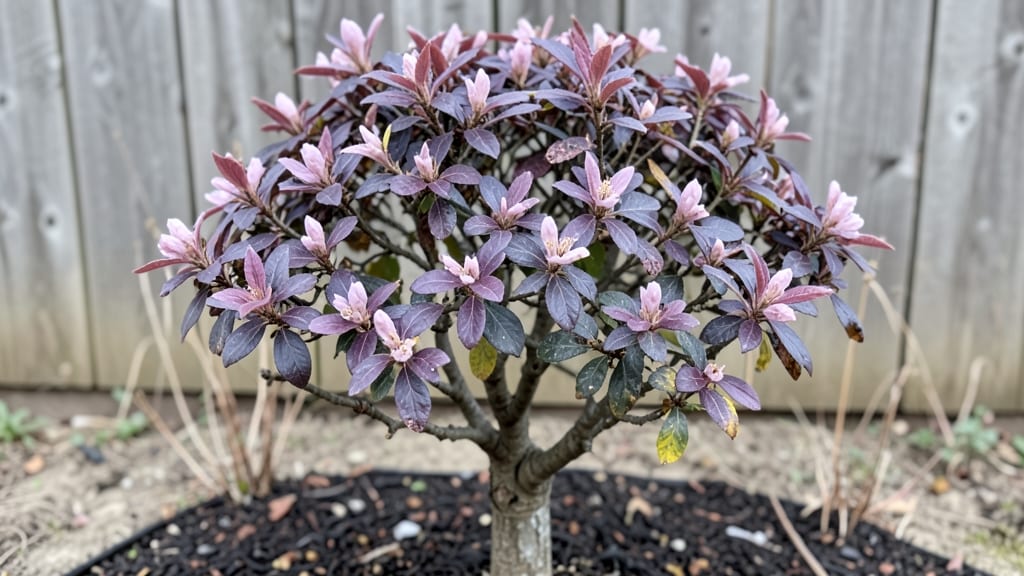
Transforming your yard with a flowering plum purple pony 🌸 starts with one critical move: pruning it the right way.
Picture this: You’ve waited all year for those show-stopping purple blooms, only for them to appear sparse or misshapen. The problem? Most gardeners prune at the wrong time—or worse, skip it entirely. Without the right cuts, your tree’s energy goes into wild, leggy branches instead of vibrant flowers.
This compact tree thrives in USDA Zone 6a and beyond, but its beauty hinges on timing. Prune too late, and you risk losing next year’s blooms.
Prune too aggressively, and you stunt its growth. The key is a late-winter or early-spring trim, paired with strategic cuts to encourage dense, flowering branches.
In this guide, I’ll walk you through the exact steps—when to cut, what to avoid, and how to keep your flowering plum purple pony looking like a springtime centerpiece for decades.
When and how to prune flowering plum Purple Pony for maximum blooms
The Flowering Plum Purple Pony thrives on precise pruning to maintain its dense blooms and compact shape. Unlike many trees, it blooms on old wood, meaning last year’s branches produce this year’s flowers.
Timing and technique are everything—cut too late or too aggressively, and you risk fewer blooms next season. My late-winter pruning strategy has kept my Purple Pony bursting with magenta-pink flowers for over a decade.
Start pruning when the tree is dormant but before buds swell, typically between February and early March in most USDA Zones 6-9. This window ensures you remove dead or weak branches while preserving the flower-producing wood.
Avoid pruning after blooms appear—new cuts won’t flower until next year. For my Purple Pony, I mark the calendar for mid-February to stay ahead of bud break.
Step-by-Step Pruning Guide for Flowering Plum Purple Pony
- 1 Gather the right tools: Use sharp bypass pruners for branches ½-inch thick, and a pruning saw for thicker stems. Sterilize tools with rubbing alcohol to prevent disease spread.
- 2 Remove dead or crossing branches: Cut back any diseased wood or branches growing toward the center. Aim for a balanced canopy to improve airflow and light penetration.
- 3 Thin out overcrowded areas: Selectively prune 20-30% of the oldest branches to encourage new growth. Focus on branches that rub against others or grow inward.
- 4 Make clean, angled cuts: Always cut just above a bud or branch collar, at a 45-degree angle. Avoid leaving stubs, which invite rot and pests.
- 5 Shape the tree gradually: Avoid drastic size reduction. Instead, prune 10-15% of the canopy annually to maintain the tree’s natural form and encourage year-round blooms.
- 6 Clean up and mulch: Collect and dispose of pruned debris to prevent fungal growth. Apply a 2-inch layer of mulch around the base to retain moisture and regulate soil temperature.
When pruning, prioritize structural integrity over aesthetics. Look for water sprouts (fast-growing, vertical shoots) and remove them entirely—they drain energy from flower production. I also watch for suckers at the base, which I snip off immediately to redirect nutrients to the main canopy.
These small adjustments make a big difference in bloom density.
After pruning, your Purple Pony may look a little sparse, but patience is key. New branches will sprout from the branch collars where you made cuts, and these will bloom next season.
To encourage rapid recovery, apply a balanced fertilizer (like 10-10-10) in early spring, just as buds begin to swell. My tree responds beautifully to this post-pruning boost, often producing even more flowers than before.
One critical mistake to avoid is pruning after the first frost but before dormancy. This late-summer pruning can stimulate new growth that won’t harden off before winter, leaving your tree vulnerable to freeze damage.
Stick to the late-winter window for best results. I’ve seen neighbors rush pruning in October, only to watch their Purple Pony struggle the following spring.
For large branches over 1-inch thick, use a three-cut method to prevent tearing. First, make an undercut about 6 inches from the branch collar, then a top cut just outside the undercut. Finally, twist the branch slightly and make a final cut at the collar.
This technique preserves the tree’s health and reduces stress. My Purple Pony has thick branches, so I always use this method to avoid ragged wounds.
Post-pruning, monitor your tree for signs of stress, like yellowing leaves or excessive wilting. If you see these, increase watering frequency temporarily and avoid fertilizing until the tree recovers.
A light mulch layer also helps retain moisture. With proper care, my Purple Pony has recovered quickly after pruning, often rebounding with lush foliage by early summer.
Remember, consistency is key.
Common pruning mistakes that kill Purple Pony blooms (and how to fix them)
Your Flowering Plum Purple Pony may look stunning in spring, but pruning mistakes can silently sabotage its blooms. Even small errors—like cutting at the wrong time or removing too many branches—can leave your tree struggling to produce its signature vibrant purple flowers.
The good news? Most issues are reversible with the right techniques.
I’ve seen gardeners accidentally starve their trees of energy by pruning too aggressively or invite disease by using dull tools. These mistakes don’t just reduce blooms—they can weaken the tree’s structure over time. Let’s fix them before your Purple Pony becomes a shadow of its blooming potential.
⚠️ Warning: These Pruning Errors Are Killing Your Purple Pony’s Blooms
- Pruning in late summer or fall – Triggers new growth that won’t harden before winter, leading to frost damage.
- Removing more than 25% of branches – Over-pruning stresses the tree, reducing next year’s flower buds.
- Cutting too close to the trunk – Leaves large wounds that heal poorly, inviting pests and disease.
- Ignoring dead or crossing branches – Lets hidden decay spread, weakening the tree’s overall health.
- Using contaminated tools – Spreads bacterial canker, a common killer of flowering plums.
Fix these issues now to restore your tree’s natural bloom cycle and prevent long-term damage.
First, let’s tackle the biggest blooming killer: pruning at the wrong season. Many gardeners reach for their shears in late summer, thinking their Purple Pony needs a trim. But this triggers late-season growth that won’t mature before frost, leaving your tree vulnerable to winter damage.
Instead, prune in late winter or early spring, just before buds swell but before new growth starts.
Next, watch for over-pruning, which is just as damaging as neglect. If you remove more than 25% of the canopy in one session, your tree may produce fewer blooms next year.
Focus on selective thinning—remove only dead, crossing, or weak branches—to maintain airflow and sunlight penetration. This keeps the tree’s energy focused on flower production rather than recovering from stress.
Improper cuts are another silent blooming assassin. Always make cuts at a 45-degree angle, about 1/4 inch above a bud or branch collar. Cutting too close leaves ugly stubs that won’t heal properly and invites disease.
Use sharp, sterilized pruners to avoid tearing bark or spreading pathogens. For larger branches, make a two-step cut to prevent bark stripping.
Don’t overlook diseased or damaged branches—they’re often the root cause of poor blooming. Look for blackened cankers, oozing sap, or branches that die back suddenly. These are red flags for bacterial canker, a common issue in flowering plums.
Remove infected branches 6 inches below the damage and sterilize your tools with rubbing alcohol between cuts to prevent spread.
Finally, even the best pruning plan fails without proper aftercare. After pruning, apply a balanced fertilizer (like 10-10-10) to replenish nutrients lost during trimming. Water deeply to help the tree recover, and mulch around the base to retain moisture and regulate soil temperature.
With these fixes, your Purple Pony will bounce back with lush foliage and abundant blooms next season.