
Planting
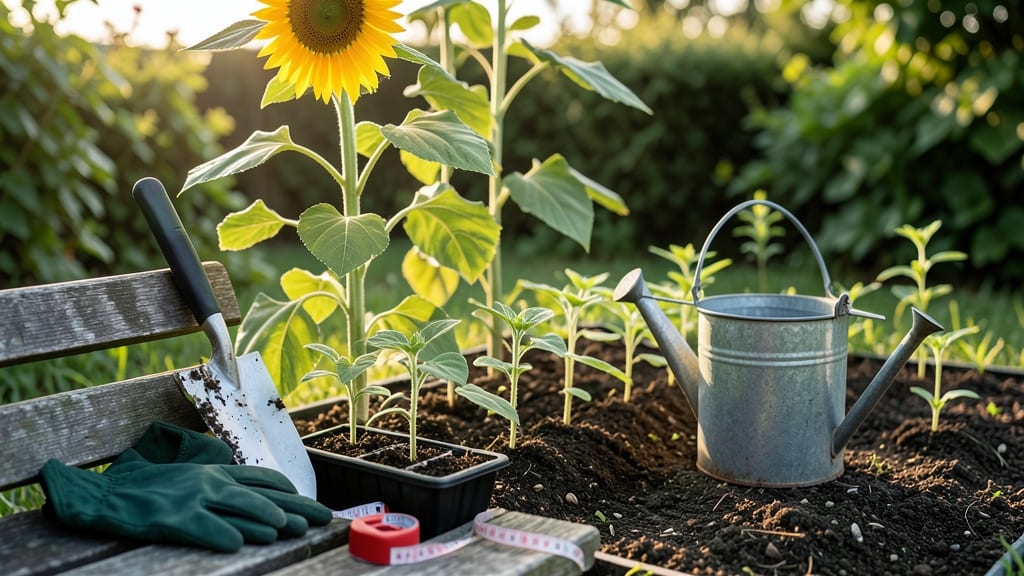
Planting sunflowers too close turns your garden into a tangled jungle of weak stems and wilted blooms—when you space them right, you get towering, sturdy plants that steal the show.
Sunflowers are nature’s skyscrapers—🌻 towering, vibrant, and impossible to ignore—but planting them too close can turn your dream garden into a tangled mess. Get the spacing right, and you’ll enjoy sturdy stems, abundant blooms, and a sunflower sea that steals the show.
Dwarf varieties need just 6–12 inches between plants, while giants demand 24 inches or more to avoid competition for sunlight and nutrients. Crowding also invites disease and weak growth, so spacing isn’t just about aesthetics—it’s the key to a thriving garden.
Below, I’ll break down the exact spacing rules for every sunflower type, plus pro tips to maximize your harvest without sacrificing space. Ready to grow sunflowers that reach for the sky?
Optimal sunflower spacing by variety: dwarf to Giant types explained
Sunflowers thrive when given room to grow, but spacing needs vary dramatically depending on whether you're planting dwarf varieties or towering giants. Too close, and you risk weak stems, disease, and stunted blooms.
Too far apart, and you waste precious garden space. The key is matching spacing to mature height—a rule that ensures every plant gets sunlight, airflow, and root space to shine.
For dwarf sunflowers (2–3 feet tall), think of them like compact shrubs. They can handle cozy quarters—6–12 inches apart—while still reaching for the sky. These varieties, like 'Teddy Bear' or 'Moulin Rouge,' are perfect for containers, borders, or cutting gardens where space is limited.
Their smaller stature means they won’t overshadow neighbors, making them ideal for mixed flower beds.
Semi-dwarf sunflowers (4–6 feet tall) strike a balance, offering height without the bulk. Space these 12–18 inches apart to give them room to grow without crowding. Varieties like 'Autumn Beauty' or 'ProCut' thrive in this range, producing abundant blooms while keeping stems sturdy enough to support their own weight.
This spacing also allows for easy access to the base for weeding and watering.
Here’s the golden rule for spacing: multiply the mature plant height by 0.5 to get the ideal spacing in inches. For example, a 10-foot giant sunflower should sit 50 inches (4.2 feet) apart.
This ratio ensures each plant has enough space to develop strong roots and stems without competing for resources.
| Variety Type | Mature Height | Optimal Spacing | Best For |
|---|---|---|---|
| Dwarf | 2–3 ft | 6–12 inches | Containers, borders, cutting gardens |
| Semi-Dwarf | 4–6 ft | 12–18 inches | Mixed flower beds, pollinator gardens |
| Standard | 8–10 ft | 24–36 inches | Back of borders, large gardens |
| Giant | 10–14 ft | 36–48 inches | Open fields, large plots, statement plants |
Giant sunflowers (10–14 feet tall) are the divas of the garden—dramatic, bold, and demanding. Space these 3–4 feet apart to prevent stems from bending under their own weight or competing for nutrients.
Varieties like 'Russian Giant' or 'Mammoth' need this room to develop the thick, sturdy stems required to support their massive blooms. Without proper spacing, you’ll end up with lanky, top-heavy plants prone to snapping in wind or rain.
Proper spacing isn’t just about height—it’s also about sunlight exposure and air circulation. Sunflowers need full sun, and crowding blocks light from reaching lower leaves, which can lead to leggy growth and fewer blooms.
Additionally, poor airflow increases the risk of powdery mildew, a common fungal disease that thrives in damp, shaded conditions. By following the spacing guidelines, you’ll create an environment where each plant can thrive.
If you’re planting in rows, space rows 2–3 feet apart to allow for easy access and to encourage airflow between plants. This is especially important for taller varieties, where stems can create a dense canopy that traps moisture.
For containers or small spaces, dwarf varieties are your best bet—just ensure each plant has at least 6 inches of space around it to prevent root competition.
One common mistake is assuming that more sunflowers equal more blooms. In reality, overcrowding often results in fewer, smaller flowers and weaker stems. For example, planting 'Russian Giant' sunflowers 18 inches apart might seem efficient, but you’ll likely end up with plants that struggle to reach their full potential.
Trust the spacing guidelines, and you’ll be rewarded with healthy, vibrant sunflowers that turn heads all season long.
For a visual guide, imagine your sunflower garden as a forest: dwarf varieties are like understory shrubs, semi-dwarfs are small trees, and giants are the towering oaks. Each needs its own space to grow strong and proud.
With the right spacing, your sunflowers will stand tall, proud, and ready to brighten up your garden from early summer until frost.
🌻
5 Common sunflower spacing mistakes that stunt growth (and how to fix them)
Sunflowers need room to thrive, but many gardeners unknowingly crowd them—leading to weak stems, fewer blooms, and even disease. Even experienced growers can make spacing mistakes that turn their sunflower patch into a tangled mess. The good news? Most issues are easy to fix with simple adjustments.
Proper spacing ensures each plant gets enough sunlight, air circulation, and nutrient access. When you ignore these basics, your sunflowers may grow lanky, produce small blooms, or even topple over. Let’s tackle the top 5 spacing mistakes and how to correct them before it’s too late.
⚠️ How Close to Plant Sunflowers?
Most gardeners overestimate how close they can plant sunflowers. Dwarf varieties need at least 6 inches apart, while standard giants require 12–24 inches between plants. Rows should be 2–3 feet apart to prevent competition for water and nutrients.
Fix it now: Measure your spacing with a ruler or stick before planting. If you’ve already sown seeds too close, thin them immediately to avoid stunted growth.
Mistake #1: Planting dwarf sunflowers too far apart might seem counterintuitive, but even small varieties like 'Teddy Bear' (2–3 feet tall) need 6–12 inches of space.
If you space them wider, they’ll spread out, creating a lush, airy display. Overcrowding leads to taller but weaker stems that flop under their own weight.
Mistake #2: Ignoring row spacing is just as harmful as crowding plants. Sunflowers need 2–3 feet between rows to allow airflow and prevent fungal diseases like powdery mildew.
Tight rows create a humid microclimate where moisture lingers, inviting pests and rot. Use a string line to mark rows before planting for consistency.
Mistake #3: Skipping thinning after germination is a silent growth killer. If you plant seeds 1 inch deep and 6 inches apart but don’t thin, you’ll end up with 3–4 seedlings per spot competing for resources. Thin to the strongest seedling, leaving the others to decompose as natural mulch.
Mistake #4: Mixing sunflower varieties without spacing adjustments can turn your garden into a chaotic jungle. Tall varieties like 'Russian Giant' (12–14 feet) need 24 inches of space, while dwarf types like 'Moulin Rouge' (3–4 feet) can handle 6–12 inches.
Plant them in separate sections or use trellises for tall types to save space.
Mistake #5: Overlooking soil depletion in dense plantings. Sunflowers are heavy feeders, and crowded plants deplete nutrients faster, leading to yellowing leaves and stunted growth. Fix this by adding compost before planting and using a balanced fertilizer (like 5-10-10) at planting time.
For small gardens, rotate sunflowers annually to restore soil health.
With these fixes, your sunflowers will stand tall, bloom generously, and reward you with a show-stopping display. Start by auditing your current spacing—your future sunflower giants will thank you! 🌻