
Light Requirements
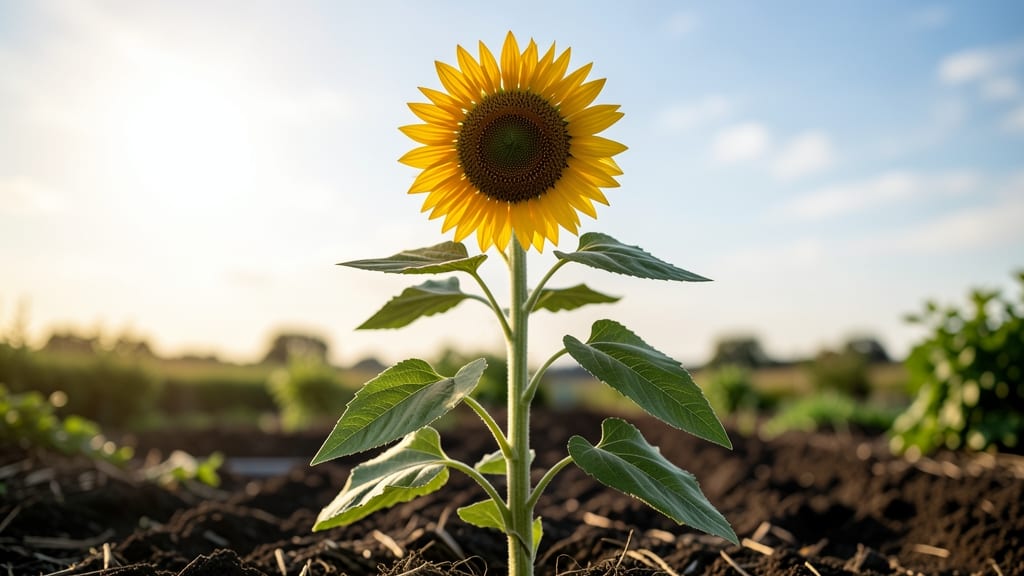
How much light does a sunflower need? It’s 6 to 8+ hours of direct sunlight daily to grow tall and vibrant 🌻—any less and you’ll watch their potential stay stuck in the soil.
Picture this: you’ve just planted your seeds in April, full of excitement for towering blooms by summer. But by July, your sunflowers are barely waist-high, their stems stretching like they’re reaching for something they can’t quite find. That’s the light talking—or rather, the lack of it.
Sunflowers thrive in full sun, meaning they need the brightest spot in your garden, not just a few hours of dappled shade. Without enough light, they’ll grow leggy, produce smaller blooms, or worse, bolt too early.
But here’s the good news: with the right placement and a few simple adjustments, you can give your sunflowers the light they crave—even in less-than-ideal conditions.
In this guide, I’ll break down exactly how much sunlight sunflowers need, how to spot signs of light deficiency, and practical tips to maximize their growth—whether you’re in a sunny backyard or a shadier urban space.
 Best Window Placement
Sunlight requirements for sunflowers: the full sun rule explained
Sunflowers aren’t just beautiful—they’re sun-powered giants that thrive under the brightest conditions. These towering plants need full sun exposure to reach their maximum height and produce those iconic golden blooms.
Without enough light, their growth slows dramatically, leaving you with leggy stems and small flowers instead of the majestic plants you dreamed of.
At their core, sunflowers are heliotropic, meaning they follow the sun’s movement throughout the day. This behavior isn’t just charming—it’s a survival strategy that maximizes their photosynthesis efficiency.
When deprived of sufficient light, their energy production drops, stunting both their stems and flower development. Let’s break down exactly how much sunlight your sunflowers truly need to shine.
🌻 Key Insight: Sunflowers require 6-8+ hours of direct sunlight daily for optimal growth. This isn’t just a rule—it’s a biological necessity. Their large leaves and rapid growth demand intense light to fuel their development. Even partial shade can reduce their height by up to 50% and delay flowering by weeks.
To measure sunlight exposure accurately, use a sunlight tracker or observe your garden throughout the day. Note when shadows fall across your planting area—if shade covers the spot for more than 2-3 hours daily, it’s not ideal for sunflowers.
Urban gardens with tall buildings or trees often create unexpected shade pockets, so always scout your location before planting.
| Sunflower Type | Minimum Daily Sunlight | Growth Impact of Partial Shade | Ideal Mature Height |
|---|---|---|---|
| Dwarf Varieties (e.g., 'Teddy Bear') | 5-6 hours | Reduced by 30-40% | 2-4 feet |
| Semi-Dwarf (e.g., 'Moulin Rouge') | 6-7 hours | Reduced by 40-50% | 4-6 feet |
| Standard (e.g., 'Mammoth') | 8+ hours | Reduced by 50-60% | 8-15 feet |
| Giant (e.g., 'Russian Giant') | 10+ hours | Reduced by 60-70% | 12-16 feet |
💡 Note: Even dwarf varieties struggle in less than 5 hours of light, producing weak stems and sparse blooms.
The science behind sunflowers’ light needs lies in their chlorophyll structure. Their broad leaves contain high concentrations of chlorophyll, which captures sunlight to produce energy through photosynthesis. When light is limited, their carbon dioxide uptake decreases, slowing growth and reducing flower size.
Think of it like a solar panel—more direct sunlight means more energy for the plant to grow and bloom.
If you’re planting sunflowers in late summer or early fall, days are naturally shorter. To compensate, choose early-maturing varieties like 'Autumn Beauty' or 'ProCut,' which can complete their life cycle in 70-80 days even with reduced daylight.
For container growers, place pots in the sunniest spot and rotate them daily to ensure even light exposure on all sides.
One common mistake is assuming that morning sun alone is sufficient. While morning sunlight is beneficial, sunflowers need uninterrupted sun from mid-morning to late afternoon (around 10 AM to 4 PM) to maximize their energy production.
If your garden only gets morning sun, consider using reflective surfaces like white walls or mirrors to bounce extra light onto the plants.
For those in northern climates with shorter summer days, focus on south-facing locations where sunlight is most intense. In urban areas, avoid planting near tall structures that cast long shadows.
If you must plant in partial shade, select dwarf varieties and supplement with a grow light for 4-6 hours daily during cloudy periods.
Remember, sunflowers aren’t just about aesthetics—they’re functional powerhouses. Their seeds are rich in nutrients, and their stalks can be used for biofuel or animal bedding.
By giving them the full sun they crave, you’re not just growing beautiful flowers—you’re cultivating a plant with multiple uses and benefits for your garden ecosystem.
🌱 Start by choosing the sunniest spot in your garden, and watch your sunflowers reach new heights—literally! With the right light, you’ll be rewarded with towering stems, vibrant blooms, and a garden that turns heads all season long.
Signs your sunflowers aren’t getting enough light (and how to fix it)
If your sunflowers look more like sad stalks than cheerful giants, light deprivation might be the culprit. These sun-loving plants stretch toward light like kids reaching for candy, but without enough, they’ll grow leggy, weak, and pale.
I’ve seen this happen in my own garden—especially when I moved sunflowers to a shadier spot "just for fun."
First, check your sunflower’s stems. Healthy ones stay sturdy and upright, while underlit plants develop long, spindly stems as they stretch toward any available light. The leaves may also appear smaller than usual and grow closer together, almost like they’re huddling for warmth.
Even the blooms suffer, producing tiny, pale petals instead of vibrant, sun-kissed faces.
🚨 callout warning 🚨
⚠️ How Much Light Does a Sunflower Need?
Minimum: 6 hours of direct sunlight daily
Optimal: 8+ hours for full growth and blooming
Sunflowers are full-sun plants—they thrive where the sun shines brightest. Without enough light, they’ll bolt (shoot up quickly) but produce small, weak blooms or no flowers at all.
Seasonal changes can trick you, especially in late summer or fall when days shorten. If your sunflowers were thriving in June but now look stunted in September, it’s not their fault—they’re just adapting to fewer daylight hours.
To help, I’ve found that reflective surfaces like white mulch or even a mirror propped nearby can bounce extra light onto your plants.
For low-light gardens, consider dwarf varieties like ‘Teddy Bear’ or ‘Moulin Rouge,’ which tolerate 4-6 hours of sun better than giants. I’ve also had success with companion planting: placing sunflowers near tall, leafy plants (like corn) can create a microclimate that captures and redirects sunlight to their bases.
If you’re growing sunflowers in containers or urban spaces, rotate the pots every few days so all sides get equal light exposure. I once had a sunflower leaning so far it nearly toppled—turning it toward the sun straightened it out in just 3 days!
Even a south-facing window can work for smaller varieties, though they’ll never reach their full height.
Don’t give up if your sunflowers are struggling—adjustments can save them. Move them to a sunnier spot, prune leggy stems to encourage bushier growth, and watch them rebound with vibrant color.
With the right light, your sunflowers will reward you with golden blooms that turn heads—just like they’re supposed to! 🌻