
Flowers
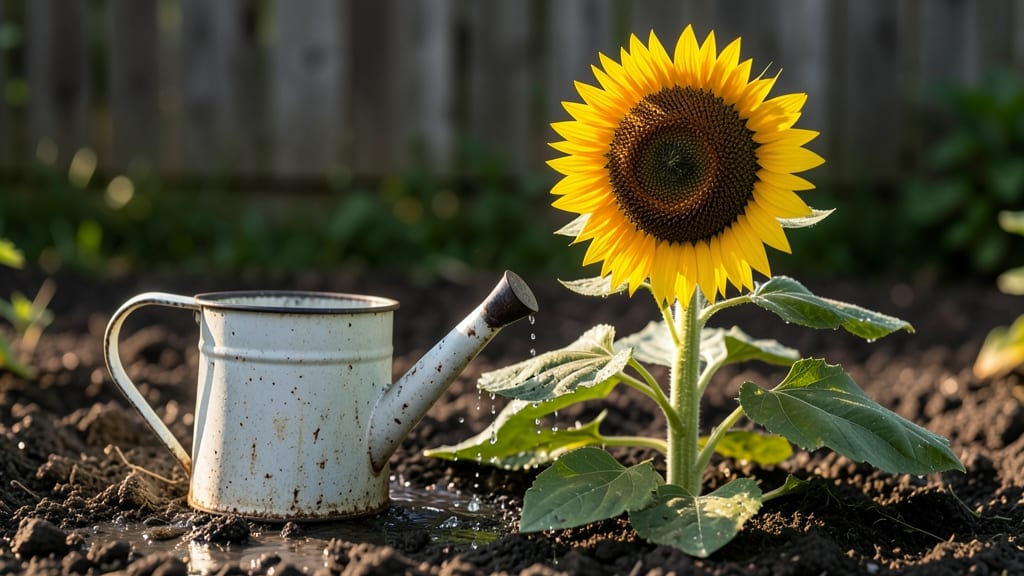
Watering sunflowers often enough keeps them thriving—but the real trick is knowing how often to water sunflowers, which most gardeners guess wrong.
Picture this: you’ve just planted your mid-spring seeds in Zone 6a, and the soil feels dry after two days. Picking up the hose seems like the right move—until you realize you’ve drowned your seedlings instead of nurturing them.
That’s the difference between a 10-foot giant and a sad, stunted plant.
Sunflowers actually prefer deep, infrequent watering over daily sprinkles. The key is checking soil moisture—about 1-2 inches down—before deciding whether it’s time to water again. Too much water causes root rot; too little stalls growth.
Below, I’ll show you how to test soil moisture like a pro, adjust for heatwaves, and spot the warning signs of over- or under-watering.
By the end, you’ll have a simple, foolproof schedule that keeps your sunflowers happy from seedling to harvest—no guesswork required.
How often to water sunflowers by growth stage: from seedlings to blooming
Sunflowers are drought-tolerant powerhouses once established, but their watering needs shift dramatically from seedling to maturity. Overwatering young plants can drown their delicate roots, while underwatering mature sunflowers stunts their towering growth. The key?
Tailoring your watering schedule to each growth stage while accounting for your local climate and soil type. Let’s break it down by phase so your sunflowers reach their full 10-foot-plus potential.
Sunflowers have four distinct growth stages, each with unique hydration requirements. Seedlings (0-4 weeks) need consistent moisture to establish roots, while vegetative plants (4-8 weeks) crave deep, infrequent watering to encourage strong stems.
During flowering (8-12 weeks), they’ll drink more as they produce those iconic blooms, and mature plants (12+ weeks) become surprisingly drought-resistant. Ignoring these stages can lead to wilting, yellowing leaves, or even root rot—so let’s dive into the perfect schedule for each.
Soil type plays a huge role in how often you water. Sandy soil drains quickly, requiring daily checks in early stages, while clay soil holds moisture longer, needing every 3-4 days once established. Loamy soil (the gold standard) balances drainage and retention, ideal for sunflowers. Always test your soil’s moisture 1 inch below the surface—this is where roots actively grow.
Temperature also dictates your watering frequency. In hot summer months (80°F+), sunflowers may need watering every 2-3 days, while cool spring/fall days (60°F-75°F) allow for every 5-7 days. Morning watering is critical—it reduces evaporation and fungal risks from evening moisture.
Aim to water before 10 AM for best results.
| Growth Stage | Watering Frequency | Depth | Key Tips |
|---|---|---|---|
| Seedlings (0-4 weeks) | Every 1-2 days (sandy soil) / Every 2-3 days (loam/clay) | 1-2 inches deep | Keep soil consistently moist, not soggy. Use a spray bottle for tiny seeds. |
| Vegetative (4-8 weeks) | Every 3-5 days (spring/fall) / Every 2-3 days (summer) | 3-4 inches deep | Water deeply to encourage deep roots. Reduce frequency as stems thicken. |
| Flowering (8-12 weeks) | Every 2-4 days (summer) / Every 4-5 days (fall) | 4-6 inches deep | Increase water during bud formation to prevent drooping. Watch for yellowing leaves (overwatering) or crispy edges (underwatering). |
| Mature (12+ weeks) | Every 5-7 days (spring/fall) / Every 3-5 days (summer drought) | 6+ inches deep (soak thoroughly) | Drought-tolerant now! Reduce watering unless soil is bone-dry. Focus on deep soaks to prevent shallow roots. |
For seedlings (weeks 0-4), the goal is to keep soil evenly moist—like a wrung-out sponge. Use a fine mist sprayer to avoid disturbing tiny seeds, and water lightly but frequently.
Overhead watering can spread disease, so consider a drip irrigation system or watering can with a rose attachment for precision. If your seedlings’ leaves turn yellow or feel mushy, you’re overwatering; if they wilt by midday, they’re thirsty.
During the vegetative stage (weeks 4-8), sunflowers shift from delicate sprouts to rapidly growing stalks. This is when you can reduce frequency but increase depth. Aim for 3-4 inches of moisture per watering to push roots deeper.
A simple test: Stick your finger 2 inches into the soil—if it’s dry, water; if damp, wait. Mulch with straw or grass clippings to retain moisture and suppress weeds, which compete for water.
The flowering stage (weeks 8-12) is when sunflowers drink the most, especially during bud formation. You’ll notice leaves drooping slightly by late afternoon—this is normal! Water deeply in the early morning to revive them.
Avoid wetting the flower buds to prevent mold. If your sunflowers’ petals close midday or leaves curl, they’re stressed from heat or thirst. Adjust by watering 1-2 inches deeper than before.
Once sunflowers reach maturity (12+ weeks), they become shockingly drought-resistant. Unless your area is experiencing extreme heat (90°F+), you can reduce watering to once a week. Focus on deep, infrequent waterings to avoid shallow roots. If you’re growing dwarf varieties (3-6 ft), they’ll need
The ultimate soil-moisture test for sunflowers: when and how to check
Checking soil moisture is the secret to keeping your sunflowers thriving without overwatering or underwatering. Unlike drought-tolerant succulents, sunflowers need consistent moisture—especially during their vegetative growth stage.
The key is testing moisture before watering, not after. I’ve found that a simple finger test works just as well as expensive tools for most gardeners.
Start by observing your sunflower’s soil texture. Sandy soil drains quickly and needs frequent checks, while clay soil holds moisture longer. For most gardeners, testing 1-2 inches deep is ideal—this is where sunflower roots actively seek hydration.
If the soil feels dry at this depth, it’s time to water. If it’s damp, hold off for another day or two.
⚠️ callout warning
Sunflowers hate soggy roots. Watering on a strict schedule (e.g., every 3 days) without checking soil moisture leads to root rot and yellowing leaves. In hot climates, soil can dry out faster—test moisture daily during heatwaves. For containers, water when the top 1 inch feels dry, as pots dry out quicker than garden beds.
For a more precise approach, use a moisture meter (they’re affordable and save guesswork). Insert the probe 2-3 inches deep—this mimics where sunflower roots are most active. Readings below 30% moisture signal it’s time to water, while readings above 60% mean you’re overdoing it.
I keep one near my sunflower patch for quick checks before watering sessions.
Watch for visual cues like wilting leaves or crispy edges—these are red flags for underwatering. Conversely, yellowing leaves or moldy soil at the base? You’re overwatering. Sunflowers also droop slightly in the afternoon heat, but they should perk up by morning. If they stay wilted, the soil is too dry.
Adjust your watering based on the growth stage. Seedlings need daily moisture to germinate, while mature plants can go 5-7 days between waterings. Always water deeply—aim for 1-2 gallons per plant—to encourage roots to grow downward, making your sunflowers more drought-resistant over time.
Pro tip: Water in the early morning to reduce evaporation and fungal risks. Avoid evening waterings, as damp leaves overnight can attract pests. With these tests and adjustments, your sunflowers will grow taller and healthier all season long. 🌻