
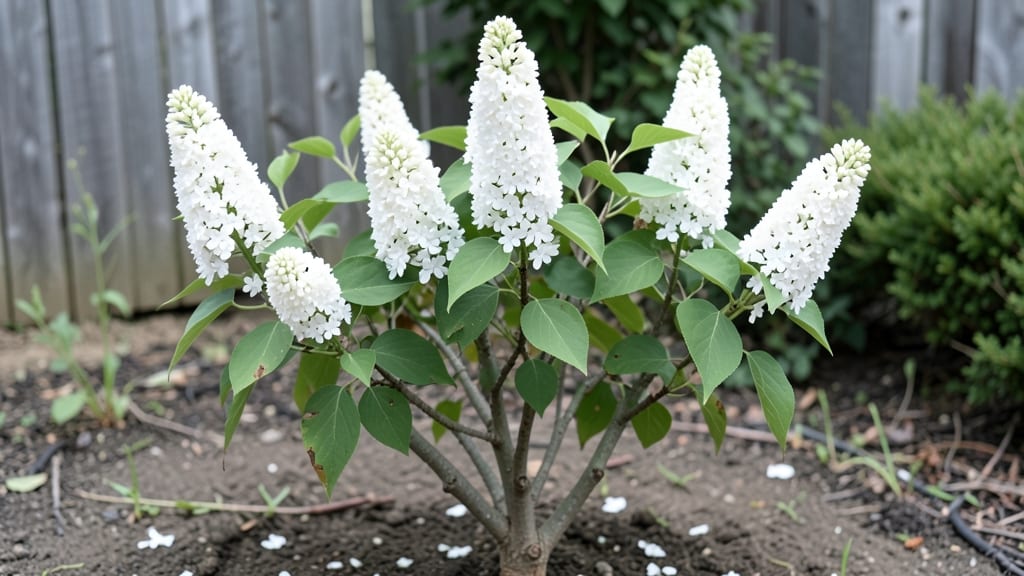
Identify White Flowering Shrubs: 10 Most Common Species in Your Region

Shrubs

Identify White Flowering Shrubs: 10 Most Common Species in Your Region

To identify a white flowering shrub 🌸, you’ll need to look beyond just the blossoms—leaf shape, fragrance, and growth habits hold the real clues.

Picture this: You’re strolling through your yard in late spring, and there it is—a lush shrub covered in delicate white blooms. But is it a fragrant gardenia, a towering lilac, or something else entirely? Without the right details, even experienced gardeners can get stumped.

This guide breaks down the 10 most common white-flowering shrubs in North America, from Mock Orange’s citrusy scent to Hydrangea’s papery petals. You’ll learn how to spot key differences, like leaf texture or branching patterns, so you can confidently name—and care for—what’s growing in your garden.

Ready to stop guessing? Here’s how to match your mystery shrub with the perfect ID, step by step.

10 Common white flowering shrubs and how to identify them by season

Identifying white flowering shrubs can feel like solving a puzzle, especially when they all seem to share similar snow-white blooms. The key lies in examining their leaf shapes, growth habits, and seasonal bloom times.

For example, a fragrant bloom in late spring likely belongs to a Mock Orange, while a late-summer cluster suggests Spirea. Let’s break down the 10 most common white-flowering shrubs in North America and how to tell them apart.

Regional adaptability plays a huge role—some shrubs thrive in USDA Zone 5 cold snaps, while others need Zone 7’s milder winters. A Lilac, for instance, handles Zone 3’s harsh winters, but a Gardenia prefers Zone 8’s warmth.

Always check your local climate zone before planting or identifying unknown shrubs.

Key visual clues to differentiate similar-looking white shrubs

White-flowering shrubs can be a gardener’s puzzle, especially when multiple species share similar blooms. The key to accurate identification lies in examining flower clusters, leaf arrangement, and subtle details like thorns or bark texture.

For example, Deutzia and Weigela both produce white flowers, but their branching habits and seed pods reveal all the difference. Let’s break down the most common visual traps and how to decode them.

Start by observing the flower arrangement. Some shrubs like Hydrangea produce large, rounded clusters, while others like Abelia have smaller, tubular blooms along the stems. Next, check for fragrance—some, like Mock Orange, emit a citrusy scent, while others remain scentless.

These details often separate look-alikes that can confuse even experienced gardeners.

Here’s a quick comparison of four commonly confused white-flowering shrubs to help you spot the differences at a glance:

Shrub Name Bloom Season Leaf Shape Fragrance Mature Height USDA Zones
Mock Orange (Philadelphus) Late spring Oval, serrated Strong citrus scent 6–12 ft 4–8
Lilac (Syringa) Early to mid-spring Heart-shaped, smooth Sweet floral 6–12 ft 3–7
Viburnum (Viburnum) Spring or fall Oval to elliptical Mild to none 3–10 ft 3–8
Spirea (Spiraea) Late spring to summer Lance-shaped, fine None 2–5 ft 3–9
Gardenia (Gardenia jasminoides) Summer Dark green, glossy Heavy jasmine scent 2–5 ft 7–10
Hydrangea (Hydrangea macrophylla) Summer to fall Opposite, oval None 3–6 ft 5–9
Weigela (Weigela florida) Spring to early summer
Feature Deutzia Weigela Hydrangea Abelia
Flower Clusters Flat-topped, panicle clusters Single trumpet-shaped blooms Large, rounded corymbs or umbels Small, tubular flowers in spikes
Fragrance Mildly sweet None or faint None Lightly fragrant, lemony
Leaf Shape Oval, serrated edges Oval to lance-shaped Large, rounded or lobed Narrow, elliptical
Branching Arching branches Upright, thick stems Woody, multi-stemmed Semi-prostrate, flexible
Unique Feature Seed pods after blooms Thorns on stems Thick bark, peeling Red fall foliage

Pay special attention to the bark texture and stem characteristics, as these often provide the most reliable clues. For instance, Weigela frequently develops small thorns along its branches, while Abelia boasts vibrant red fall foliage that sets it apart.

Don’t overlook the growth habit—whether the shrub sprawls or stays upright can be a game-changer in identification.

If you’re still unsure, examine the seed pods or fruit that develop after flowering. Some shrubs, like Deutzia, leave behind distinctive seed structures, while others produce berries or capsules.

These post-bloom features are often the final piece of the puzzle. Keep a small notebook handy during your garden walks to jot down these details for future reference.

Pro tip: Snap a photo of the leaf underside and stem attachment, as these areas often hold hidden clues. For example, Hydrangea leaves may have a slightly fuzzy texture, while Abelia leaves are smoother and more leathery.

With practice, you’ll start recognizing these shrubs at a glance, turning identification from a guess into a confident gardening skill.

🌿

★★★★★4.8(7 reviews)
Categories Shrubs