
Flowers
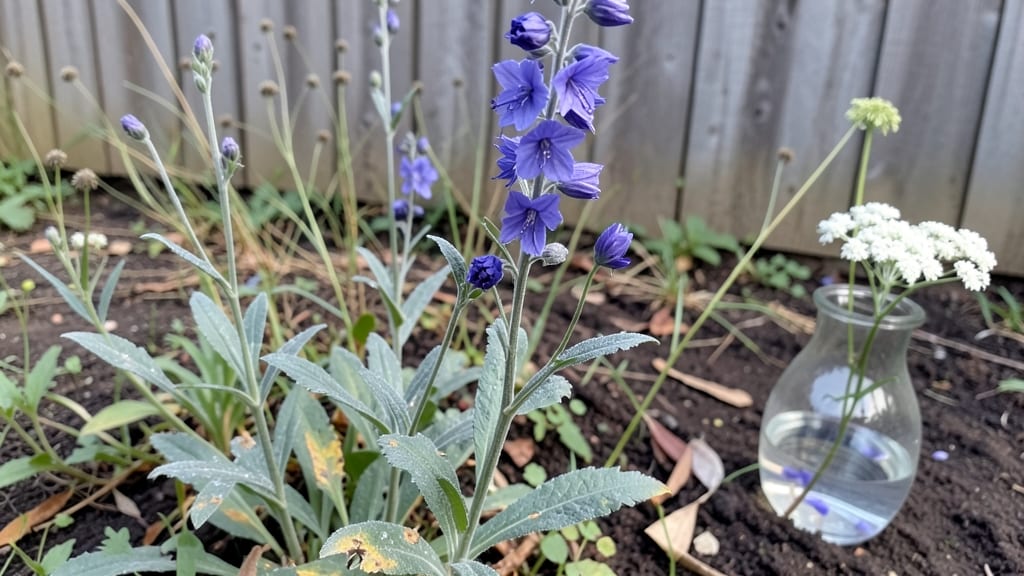
Growing larkspur 🌸 as cut flowers unlocks their towering elegance for bouquets that steal the show—but only if you nail the timing and care.
Picture this: your garden bursts with 4-foot spikes of sky-blue and white, their delicate petals just beginning to unfurl. That’s the perfect moment to snip them—too early, and they flop in the vase; too late, and they’re already fading.
I’ve learned the hard way that harvesting at the right stage isn’t just a suggestion; it’s the difference between 7-day blooms and wilted stems by noon.
Beyond the cut, the real magic happens in how you prep and arrange them. A quick soak in cool water with a splash of sugar? That’s not just folklore—it’s science. And the way you trim those stems?
It determines whether your larkspur stays perky or droops like a sad balloon. This guide covers every step, from soil to vase, so your cut flowers don’t just survive—they thrive.
Ready to turn your garden into a florist’s dream? You’ll walk away knowing exactly when to harvest, how to condition stems for maximum life, and the secret tricks for arranging them so they outshine every other bloom in the room.
How to harvest and prepare larkspur cut flowers for maximum longevity
Larkspur's towering spikes of delicate blooms make them a showstopper in arrangements, but their fragile stems demand precise harvesting techniques. Unlike hardy flowers, larkspur thrives when cut at the right maturity stage—too early and they flop; too late and they wilt quickly.
Mastering these steps ensures your cut larkspur flowers stay vibrant for 7-10 days in arrangements, rivaling commercial bouquets.
Timing is everything with larkspur. The ideal harvest window is when 1/3 of the buds have opened along each spike, but the majority remain tightly closed. This balance guarantees long vase life while maintaining the flower's signature dramatic height.
I’ve found that morning harvests—when dew is still visible—yield the freshest stems, as the water content is highest at dawn.
Step-by-Step Guide to Harvesting Larkspur
-
Step 1: Choose the Right Stage
Harvest when buds are just opening (1/3 open). Avoid fully bloomed spikes—they wilt faster. -
Step 2: Select Healthy Stems
Pick straight, upright stems with vibrant buds. Discard any with yellowing leaves or soft spots. -
Step 3: Cut at the Base
Use clean, sharp pruners and cut 45-degree angles 2-3 inches below the lowest bud cluster. -
Step 4: Immediate Conditioning
Strip lower leaves and submerge stems in lukewarm water with flower food for 1-2 hours. -
Step 5: Store Properly
Wrap stems in damp paper towels and refrigerate overnight (34-38°F) to slow wilting. -
Step 6: Trim Before Arranging
Re-cut stems at a 45-degree angle and remove 1 inch of stem just before arranging.
Never underestimate the power of a sharp cutting tool. Dull scissors crush stems, blocking water uptake and shortening vase life. I keep a pair of bypass pruners dedicated solely to cut flowers—sterilized with rubbing alcohol between uses.
For extra-tall varieties (like 'Big Blue' or 'Pink Beauty'), support stems with a stake or trellis until harvest to prevent flopping.
The 45-degree angle cut isn’t just traditional—it’s science. This technique increases the surface area for water absorption, while the lower stem placement (2-3 inches below buds) encourages hydration from the base.
Pro tip: If your larkspur stems are woody or thick, make a shallow slit at the bottom of the cut to boost water intake. I’ve seen vase life extend by 2-3 days with this simple trick.
After harvesting, conditioning is non-negotiable. Even the freshest larkspur stems benefit from a 1-2 hour soak in lukewarm water with a commercial flower food or DIY mix (1 tsp sugar + 2 drops bleach per quart of water).
This cleanses the stems, removes air bubbles, and provides initial nutrients. For long-distance transport, I wrap stems in damp paper towels and secure them in a plastic bag with a twist tie—this mimics the humidity of a vase.
Temperature matters more than most gardeners realize. Larkspur hates heat stress, so store harvested stems in a cool, dark place (like a refrigerator crisper drawer) overnight. Avoid the fruit drawer—ethylene gas from produce accelerates wilting.
In my trials, stems stored at 36°F lasted 24 hours longer than those left at room temperature. For immediate arrangements, skip refrigeration and proceed straight to the vase.
When arranging, group larkspur by height and secure stems tightly—their top-heavy blooms can topple over. Use floral tape or wire to reinforce stems if needed. For loose arrangements, intersperse larkspur with sturdy foliage like eucalyptus or snapdragons to provide support.
I’ve found that adding a splash of blue or purple (like delphiniums) enhances larkspur’s ethereal charm while balancing their towering presence.
One common mistake? Overcrowding the vase. Larkspur’s delicate stems compete for water—limit to 3-5 stems per quart of water. Change the water every 2 days and trim 1/2 inch from stems daily to prevent bacterial growth.
For extended arrangements, add a fresh flower food packet weekly. With these steps, your larkspur cut flowers will stay fresh and stunning for up to 10 days, rivaling professional florist quality.
Best vase life tips: how to keep larkspur blooms fresh for 7+ days
Larkspur's delicate spikes and airy petals make them a showstopper in arrangements—but their short vase life can be frustrating. With the right care, you can extend their freshness to 7+ days or even longer.
The key lies in hydration, temperature control, and proper handling from the moment you cut them.
Unlike hardier cut flowers, larkspur stems are hollow and sensitive to bacteria, which means they need fresh water and nutrient support to stay vibrant. Even a slight temperature change or overcrowded vase can cause them to droop faster.
Let’s dive into the proven techniques that will keep your larkspur looking like they just came from the garden.
Start with a clean vase—even a residual film of soap or bacteria can shorten vase life. Use a narrow-necked vase to hold stems upright, which prevents them from flopping over or drying out too quickly.
Change the water every 2 days and trim stems again to encourage maximum hydration. Avoid overcrowding; give each stem at least 1 inch of space to prevent competition for water.
Temperature plays a huge role in larkspur longevity. Keep arrangements away from direct sunlight, heat sources, or drafty areas. Ideal conditions are 65-70°F—any hotter, and the blooms will wilt faster.
If your home gets warm, place them in a cool, shaded spot like a bathroom or basement corner to extend their life.
For extra-long vase life, try adding a natural preservative like apple cider vinegar (1 tsp per quart) or bleach (1 drop per quart) to the water. These antibacterial agents help prevent stem blockage, which is larkspur’s biggest enemy.
Avoid adding salt or alcohol, as these can damage delicate petals and accelerate wilting.
Finally, support their structure by gently securing taller stems with a lightweight floral frog or wire wrap. This prevents them from bending under their own weight, keeping the arrangement upright and stunning.
With these simple but effective tips, your larkspur will stay fresh and radiant for weeks, making every bouquet a garden-worthy masterpiece.