
Pests
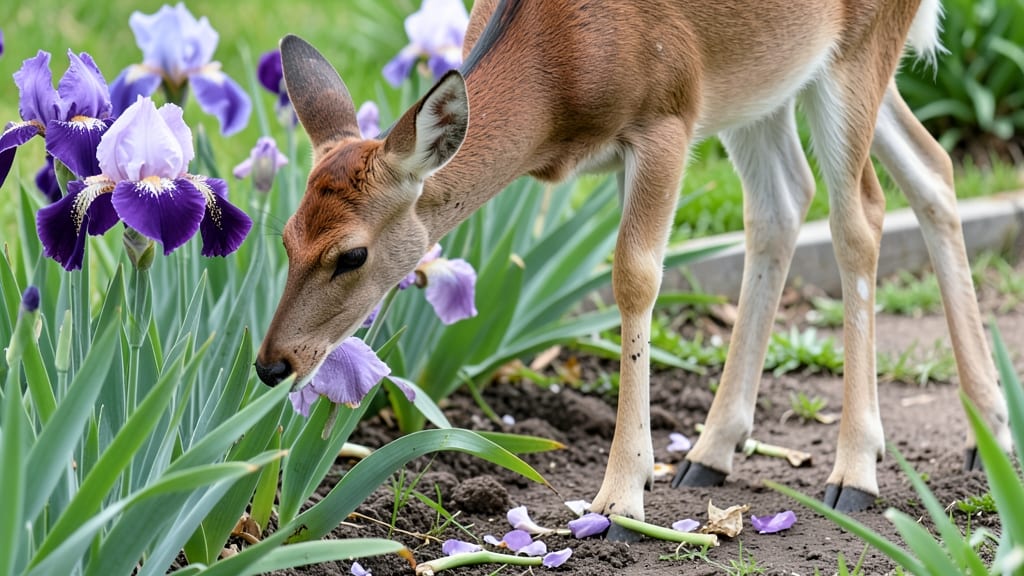
Deer do eat iris flowers, especially the leaves and rhizomes, which they often strip down to the ground. Their browsing can devastate irises if left unchecked, as they prefer the tender new growth and blooms. Protecting irises requires strategic deterrents like repellents or physical barriers.
Irises are a deer’s garden buffet because their nutrient-rich rhizomes and tender spring foliage offer an irresistible snack.
Unlike tougher perennials, irises lack natural defenses like thorns or strong aromas, making them prime targets during dawn and dusk when deer forage. 🌿 I’ve seen entire iris beds reduced to stubble in a single night—especially in early spring when deer seek fresh greens after winter.
What makes this worse is that deer rarely eat the bulbs themselves until other options are scarce, focusing instead on the leaves that weaken the plant’s ability to photosynthesize. This means even if you miss the initial damage, your irises may still fail to thrive.
The key is acting fast with deterrents before deer turn your garden into a salad bar.
💡 In This Article
- Why Deer Target Iris Plants in Gardens
- Effective Deer-Proofing Strategies for Iris Gardens
Why deer target iris plants in gardens
Deer zero in on irises because they offer a perfect combination of nutrition and accessibility. The rhizomes contain complex carbohydrates and starches that deer digest efficiently, while the young leaves provide high moisture content—ideal for their diet.
Unlike woody plants, irises have soft, non-fibrous foliage that requires minimal chewing effort. 🌱 This makes them easier to consume than, say, the tough stems of peonies or the fibrous leaves of hostas, which deer often avoid unless desperate.
The timing of iris growth explains why deer attack in spring and early summer—this is when the foliage is most tender and nutrient-dense. Deer have evolved to recognize these seasonal shifts through scent and texture cues.
They can detect the volatile organic compounds released by new iris growth, which signals fresh food. Studies show deer prefer plants with nitrogen-rich leaves, and iris foliage typically contains 2-3% nitrogen by dry weight—well above the 1% threshold that triggers their interest.
What makes irises uniquely vulnerable is their lack of natural defenses. Unlike roses (which have thorns) or lavender (which emits strong aromas deer dislike), irises offer no physical or chemical deterrents.
Even the sword-like leaves aren't sharp enough to discourage browsing. 🦌 In contrast, deer-resistant plants like foxglove or lamb's ear contain toxic compounds or fuzzy textures that deer instinctively avoid. The result? Irises become a "safe bet" for deer during their nightly foraging rounds.
Seasonal patterns also play a critical role. Deer browsing peaks during dawn and dusk when they're most active, and iris foliage reaches its most palatable stage in April-May.
At this time, deer prioritize irises over other perennials because the leaves are 6-12 inches tall—perfect for their browsing height of 12-18 inches. Compare this to hostas, which deer often ignore until they reach 18+ inches in height, giving irises a head start in becoming a deer buffet.
Here's what most gardeners don't realize: deer actually prefer iris blooms over the foliage when available. The petals contain higher sugar concentrations (up to 15% by weight) than the leaves, making them a sweet treat.
This explains why you might see perfectly intact leaves but chewed blossoms—deer prioritize the most nutrient-dense parts first. 🌸 The irony? Many gardeners plant irises for their stunning flowers, only to have deer turn them into a snack before they even bloom.
To put this in perspective, consider how deer rank iris plants against other garden staples. On a 1-10 scale of deer attractiveness (with 10 being most appealing), irises score an 8-9, while deer-resistant plants like Russian sage or catmint score 2-3.
This ranking explains why even well-established iris beds can be decimated in a single season, while neighboring salvia or yarrow plants remain untouched. The key difference? Irises lack the aromatic oils or toxic compounds that make other perennials less appealing to deer.