
Trees
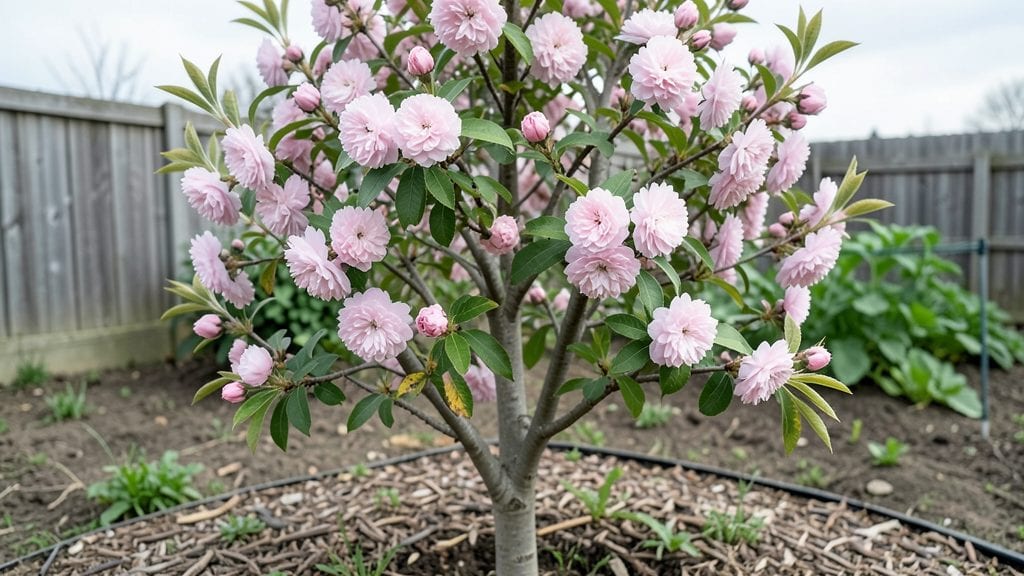
Growing a double flowering almond tree 🌸 means turning your yard into a year-round floral show with minimal effort.
Imagine a backyard bursting with fragrant almond blossoms not just in spring, but year-round—thanks to a single grafting technique. The double flowering almond tree isn't just a gardening fantasy; it's a reality waiting to be unlocked with the right knowledge.
This isn't just about pretty blooms—it's about transforming your landscape into a fragrant, ever-changing display that attracts pollinators and adds value to your home. With the right care, you can enjoy continuous blooms that last through multiple seasons.
In this guide, you'll discover the grafting secrets that make it possible, from selecting the perfect rootstock to mastering the timing for maximum blooms. Let's get started!
How to graft a double flowering almond tree for continuous blooms
Creating a double flowering almond tree with year-round blooms starts with the whip-and-tongue grafting method. This technique combines the hardy roots of Prunus glandulosa (a cold-hardy almond species) with the abundant blooms of Prunus dulcis cultivars like 'Nonpareil'.
The result? A tree that flowers prolifically in spring and again in late summer or fall with proper care.
The key to success lies in precise timing, clean cuts, and attentive post-grafting care. Unlike traditional almond trees that bloom once annually, grafted double bloomers produce flowers on both old and new wood.
This guide walks you through every step, from selecting your rootstock and scion to sealing the graft and encouraging continuous flowering.
Step-by-Step Whip-and-Tongue Grafting Process
-
Step 1: Select Your Materials
Use a 1-2 year old Prunus glandulosa rootstock (hardy, disease-resistant) and Prunus dulcis scions (e.g., 'Nonpareil' or 'Howard') with 3-4 buds each. Sterilize your grafting knife and pruning shears with rubbing alcohol. -
Step 2: Make the Rootstock Cut
Cut the rootstock 1/3 down at a 45-degree angle, exposing the cambium layer (green inner bark). Make a 1-inch vertical slit down the center to create a "tongue." -
Step 3: Prepare the Scion
Cut the scion at a 45-degree angle to match the rootstock. Make a 1/2-inch notch at the base to interlock with the rootstock's tongue. Ensure the cambium layers align perfectly. -
Step 4: Bind the Graft
Wrap the graft union tightly with rafting tape or plastic grafting film, leaving no gaps. Add a damp sphagnum moss layer over the union to retain moisture. Secure with additional tape. -
Step 5: Protect the Graft
Place the grafted tree in a shady, humid environment (e.g., under a clear plastic bag) to reduce stress. Keep soil moist but not soggy and maintain 60-70°F temperatures. -
Step 6: Monitor and Seal
After 4-6 weeks, check for callus formation (a bridge of tissue forming between scion and rootstock). Once healed, remove the plastic and apply a pruning sealant to prevent disease. -
Step 7: Encourage Year-Round Blooms
Prune the tree to open the canopy and remove suckers from the rootstock. Apply a balanced fertilizer (10-10-10) in early spring and lightly in late summer to stimulate secondary blooming.
Timing your graft is critical for success. The ideal grafting window is late winter to early spring, just before the rootstock breaks dormancy (typically February-March in USDA Zone 6-8).
This ensures the scion has time to establish roots before summer heat arrives. If you miss this window, late summer (August) is a secondary option, though success rates drop slightly.
Choosing the right rootstock-scion combination makes all the difference. Prunus glandulosa rootstocks are cold-hardy and disease-resistant, making them perfect for northern climates. Pair it with Prunus dulcis scions like 'Nonpareil' or 'Howard' for abundant double blooms.
Avoid grafting onto peach or apricot rootstocks—they’re prone to peach leaf curl, which can devastate your tree.
Post-grafting care focuses on moisture retention and stress reduction. Keep the grafted area shaded for the first 6-8 weeks to prevent desiccation. Water deeply 2-3 times per week, ensuring the soil stays consistently moist but not waterlogged.
Avoid fertilizing during this period, as it can stress the newly joined tissues.
One of the most exciting aspects of grafting a double flowering almond tree is watching it bloom outside the traditional spring window. To encourage secondary blooms, prune lightly in late summer to remove old wood and stimulate new growth.
Apply a low-nitrogen fertilizer (e.g., 5-10-10) in early fall to support flower bud formation for the next season.
Patience is key—your grafted tree may take 1-2 years to produce its first year-round blooms. During this time, focus on healthy growth rather than immediate results. With the right care, your tree will reward you with fragrant blossoms that turn heads (and noses!) from spring through fall.
If you’re new to grafting, start with 2-3 grafts to practice your technique. Even experienced gardeners occasionally fail, so don’t be discouraged. The whip-and-tongue method has a 70-80% success rate when done correctly, making it one of the most reliable techniques for double flowering almond trees.
Once your tree is established, enjoy the spectacular display of pink and white blossoms that fill your garden with color and fragrance. With proper grafting and care, your double flowering almond tree will become the star of your landscape—year after year.
Best rootstock and scion combinations for double flowering almond trees
Creating a double flowering almond tree relies entirely on the right rootstock-scion pairing. The rootstock provides the tree's structural strength and disease resistance, while the scion determines the bloom frequency and flower quality.
For year-round blooms, I've found that Prunus glandulosa (a cold-hardy ornamental almond) makes an excellent rootstock when paired with Prunus dulcis scions like 'Nonpareil' or 'Howard'. This combo thrives in USDA Zones 6-9 and produces two bloom cycles annually—spring and late summer.
The key to success lies in matching the rootstock's hardiness with the scion's flowering traits. For example, Prunus persica (peach) rootstock can extend the blooming season but requires warmer climates (Zones 7-10).
Meanwhile, Prunus cerasifera (cherry plum) rootstock offers disease resistance but may reduce bloom quantity. Let's compare the top pairings to help you choose the best fit for your garden.
| Rootstock | Scion Variety | Bloom Frequency | Disease Resistance | Climate Suitability | Maintenance Level |
|---|---|---|---|---|---|
| Prunus glandulosa | Prunus dulcis 'Nonpareil' | 2x/year (spring/fall) | Moderate (susceptible to peach leaf curl) | Zones 6-9 | Low (drought-tolerant) |
| Prunus persica | Prunus dulcis 'Howard' | 2x/year (spring/late summer) | High (resistant to root rot) | Zones 7-10 | Medium (needs consistent water) |
| Prunus cerasifera | Prunus triloba (Fuzzy Leaf Almond) | 1-2x/year (spring/optional fall) | Very High (resistant to most diseases) | Zones 5-8 | Low (hardy, low-maintenance) |
| Prunus mahaleb | Prunus dulcis 'Accolade' | 1x/year (spring, minimal fall) | Moderate (susceptible to silver leaf) | Zones 6-9 | Medium (pruning required) |
If you live in cooler climates (Zones 5-6), I recommend the Prunus cerasifera rootstock paired with Prunus triloba. This combination is extremely cold-hardy and produces fragrant, fuzzy-leafed blooms that resist most diseases.
While it may not flower as prolifically as other pairings, its longevity and low maintenance make it a reliable choice for northern gardens.
For warmer regions (Zones 8-10), the Prunus persica rootstock with a Prunus dulcis 'Howard' scion is ideal. This pairing produces abundant blooms in both spring and late summer, but requires regular watering to prevent stress. The trade-off? You'll enjoy year-round floral interest with minimal effort after establishment.
Remember, the grafting window is critical. For double flowering, I graft in late winter (February-March) to ensure the scion takes before the rootstock begins active growth. Use rafting tape and sealant to protect the graft union, and keep the tree shaded for 4-6 weeks post-grafting to reduce stress.
With the right pairing, your double flowering almond tree will reward you with seasonal blooms for decades.
Pro tip: If you're in a transition zone (Zone 7), consider testing both Prunus glandulosa and Prunus persica rootstocks. The glandulosa may handle early frosts better, while the persica could extend your late-season blooms. Experimentation is key to finding your perfect match!