
Container Gardens
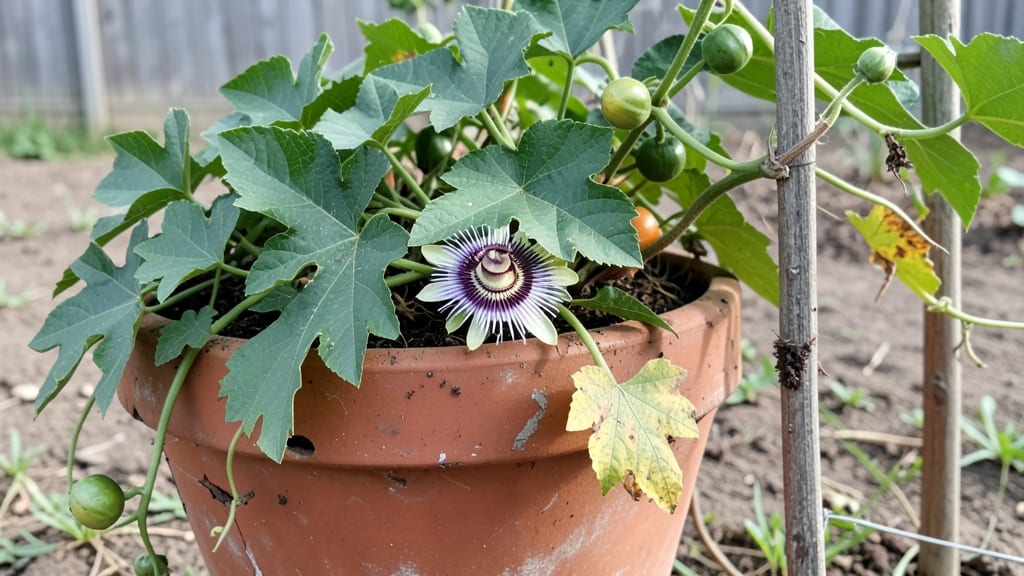
Growing passion flowers in containers lets you enjoy their exotic blooms anywhere—balconies, patios, or even indoors near bright windows. 🌿 I learned the hard way that these vines need more than just a pot; they demand the right mix of soil, support, and care to thrive without taking over your space.
The key is matching their tropical roots with containers that won’t suffocate them or let water pool at the bottom.
Start with a 15-20 gallon container for mature vines, filled with a well-draining mix of 50% potting soil, 30% perlite, and 20% compost. Passion flowers hate soggy roots, so add a 2-inch layer of gravel at the bottom for drainage.
A trellis or sturdy cage is non-negotiable—their vines can grow 10-20 feet in a season, and without support, they’ll flop into a tangled mess.
Place your container where it gets full sun (6+ hours daily) and water when the top inch of soil feels dry. Overwatering is the #1 killer of potted passion flowers, so let the soil dry slightly between drinks.
With the right setup, you’ll see vibrant blooms from late spring through fall, and some varieties even flower in winter with extra light.
Here’s the secret to keeping them happy: prune back leggy growth in early spring to encourage bushier vines, and fertilize monthly with a balanced liquid fertilizer during blooming season.
Containers let you move the plant to follow the sun or protect it from frost—no digging, no fuss, just year-round drama in a pot.
📚 In This Guide
- What you need
- Instructions
- Tips and common mistakes
- Wrapping up and next steps
What you need
- ● Container: A 5-gallon or larger pot (12–18 inches deep) with drainage holes. Choose a wide-mouth container for easy repotting as vines grow.
- ● High-quality potting mix: A well-draining blend like cactus/succulent mix (mix with perlite or orchid bark for aeration). Avoid garden soil—it compacts and retains too much moisture.
- ● Passion flower plant: Start with a healthy nursery-grown vine (e.g., Passiflora caerulea or Passiflora incarnata) or propagate from seeds/cuttings.
- ● Support structure: A trellis, obelisk, or sturdy cage (3–6 feet tall) to guide vertical growth.
- ○ Gloves (optional but helpful for handling thorns).
- ● Pruning shears (for trimming dead/damaged vines).
- ● Slow-release fertilizer (balanced 10-10-10 or organic options like worm castings).
- ● Mulch (orchid bark or pine needles) to retain moisture.
- ● Watering can with a rose attachment (for gentle, deep watering).
- ● Container saucer or tray (to catch excess water and prevent messes).
- ● A sunny spot (6+ hours of direct sunlight daily). Partial shade works for some varieties but may reduce blooms.
- ● Access to water (passion flowers need consistent moisture but hate soggy roots).
- ● Patience! 🌱 Passion flowers can take 6–12 months to bloom but reward you with vibrant flowers year-round.
Step-by-Step instructions for growing passion flower in containers
Here's how to keep these dramatic vines blooming beautifully in pots year after year.
🪴 Step 1: Select the Right Container and Drainage
Choose a minimum 18-inch diameter container with drainage holes—passion vines need room to sprawl and hate soggy roots. I use unglazed terra cotta pots because they breathe better than plastic, but any container with at least 12 inches of depth works. The wider the pot, the more soil volume the vine can explore, which means more blooms.
Line the bottom with 2-3 inches of gravel or broken pottery pieces to create an air pocket. This prevents waterlogging while still allowing excess moisture to drain. If your container lacks drainage holes, drill several—passion vines are tropical but won't tolerate wet feet. Real talk: I once skipped this and my vine rotted within weeks. Don't make that mistake.
🌱 Step 2: Prepare Well-Draining Soil Mix
Fill the container with a mix of 50% potting soil, 30% perlite, and 20% compost. Passion vines need fertile soil but also excellent drainage. I always add 1 cup of slow-release fertilizer (like 10-10-10) to the bottom layer—this gives roots a nutrient boost without burning tender new growth.
Moisten the mix until it's damp but not dripping. The soil should hold together when squeezed but not feel compacted. Here's the thing—passion vines are heavy feeders, so I top-dress with 1 tablespoon of organic fertilizer every 4-6 weeks during the growing season. You'll see the difference in leaf size and bloom quantity within a month.
☀️ Step 3: Plant and Position for Maximum Sunlight
Dig a hole in the center of the pot and place your passion vine plant so the top of the root ball sits 1 inch below the soil surface. Gently firm the soil around the roots to eliminate air pockets. I like to water deeply right after planting to help settle everything—this prevents transplant shock.
Passion vines need full sun (6-8 hours daily) to produce their signature exotic blooms. Place your container in the southeast or southwest corner of a patio or balcony. If you notice the leaves turning pale or the vine growing leggy (stretching toward the light), it's getting too little sun. Move it closer or supplement with a grow light for 4-6 hours daily during shorter days.
💧 Step 4: Water and Feed for Continuous Blooms
Water when the top 2 inches of soil feel dry—about once a week in summer, less in winter. Passion vines are drought-tolerant once established, but they won't bloom well if the soil dries out completely. I always check by sticking my finger into the soil; if it's dry past the first knuckle, it's time to water. Overwatering is the real enemy—yellowing leaves or mushy stems are your warning signs.
Feed every 4-6 weeks during the growing season with a balanced liquid fertilizer (like 20-20-20). I dilute it to half-strength to avoid burning the roots. You'll know you're doing it right when new growth appears within a week and the vine starts sending out more tendrils. Here's where it gets fun—watch the first buds form after consistent feeding.
✂️ Step 5: Prune and Train for Healthier Growth
Prune in early spring before new growth begins. Cut back one-third of the previous year's growth to encourage bushier, more productive vines. Remove any dead, diseased, or crossing branches—this improves airflow and reduces pests. I always sterilize my pruners with rubbing alcohol between cuts to prevent spreading any hidden infections.
Train the vine by gently guiding the main stem along a trellis or wire frame as it grows. This keeps the plant contained and makes harvesting easier. Passion vines can get 10-15 feet long in a season, so secure the trellis firmly to a wall or sturdy post. You'll see stronger stems and more flowers when the vine has support—it's like giving it a confidence boost.
Tips & tricks for thriving passion flower vines in containers
Here's what I've learned over years of growing passion vines that produce stunning blooms year after year.
Container Selection: In Step 1, when choosing your container, consider adding a saucer or tray underneath to catch excess water—this prevents root rot from standing water. Terra cotta pots are ideal, but if you use plastic, add extra perlite to the soil mix to improve drainage. I've found that wider containers (up to 24 inches) produce more blooms because the vine has more room to establish roots.
Soil Mix Secrets: For Step 2, don't skimp on the perlite—it's what prevents that dreaded soggy soil. I like to add a handful of orchid bark to the mix for extra aeration. When mixing, think "fluffy cake batter" consistency—not too dense, but holding together. The 50/30/20 ratio works perfectly, but you can increase perlite to 40% if you live in a humid climate.
Sunlight Strategy: In Step 3, when positioning your vine, remember that morning sun is gentler than afternoon sun. If you notice leaves curling or turning yellow, it's a sign of too much direct afternoon heat. I've had great success moving containers slightly every few weeks to ensure even sun exposure—this prevents leggy growth and encourages bushier vines with more blooms.
Pruning and Training: When pruning in Step 5, make your cuts at a 45-degree angle just above a leaf node. This encourages new growth from that spot. For training, I use a simple wire trellis system that attaches to the container sides—it's sturdy enough to support 10-foot vines without toppling. The key is to gently tie the main stem every 6-8 inches as it grows to prevent it from becoming tangled.
Pro Tips for Passion Flower Container
- Here's what I've learned over years of growing passion vines that produce stunning blooms year after year.
- Container Selection: In Step 1, when choosing your container, consider adding a saucer or tray underneath to catch excess water—this prevents root rot from standing water.
- Soil Mix Secrets: For Step 2, don't skimp on the perlite—it's what prevents that dreaded soggy soil.
Frequently asked questions
Got questions about growing passion flowers in containers? You’re not alone! Here are answers to some of the most common inquiries—so you can enjoy those stunning vines without the hassle.
How often should I water my passion flower in a container?
Passion flowers love moisture but hate soggy roots! Water your container when the top inch of soil feels dry—usually every 2–3 days in summer and every 4–5 days in cooler months. Use well-draining soil and a pot with drainage holes to prevent overwatering.
When is the best time to plant passion flowers in containers?
The ideal time is spring (after the last frost) or early summer when temperatures are warm. This gives the vine time to establish roots before winter. If you’re in a mild climate, you can even plant in fall—just protect it from frost!
Can I grow passion flowers in small containers?
Yes, but they’ll need regular pruning to stay compact. Choose a container at least 12–18 inches wide with good drainage. For larger varieties, opt for a 20+ inch pot. Train vines upward with trellises or stakes to save space!
Why aren’t my passion flowers blooming?
Low blooms could mean too much nitrogen (use a balanced fertilizer), not enough sunlight (<6 hours daily), or insufficient pruning. Try fertilizing with a phosphorus-rich mix (like 5-10-5) and ensure warm, sunny spots. Patience pays off—some vines take a year to bloom!
How do I protect my container passion flower in winter?
If temps drop below 20°F (-6°C), move the pot to a sheltered spot (garage, porch) and wrap it in bubble wrap or burlap. Reduce watering but keep soil slightly moist. Evergreen varieties are hardier—choose them if you’re in a cold zone!
Wrapping up and next steps
Growing passion flowers in containers is a rewarding way to bring vibrant blooms and lush foliage to any space—whether you're a seasoned gardener or just starting out! 🌸 With the right container, soil, and care, your vines will thrive and reward you with stunning year-round flowers. Now that you’re equipped with tips and answers to common questions, it’s time to roll up your sleeves and create your own passion flower paradise.
Ready to take the next step? Pick your favorite container, gather your supplies, and start planting! Watch as your passion flower climbs, blooms, and transforms your balcony, patio, or windowsill into a breathtaking garden oasis. Happy gardening! 🌿