
Landscaping
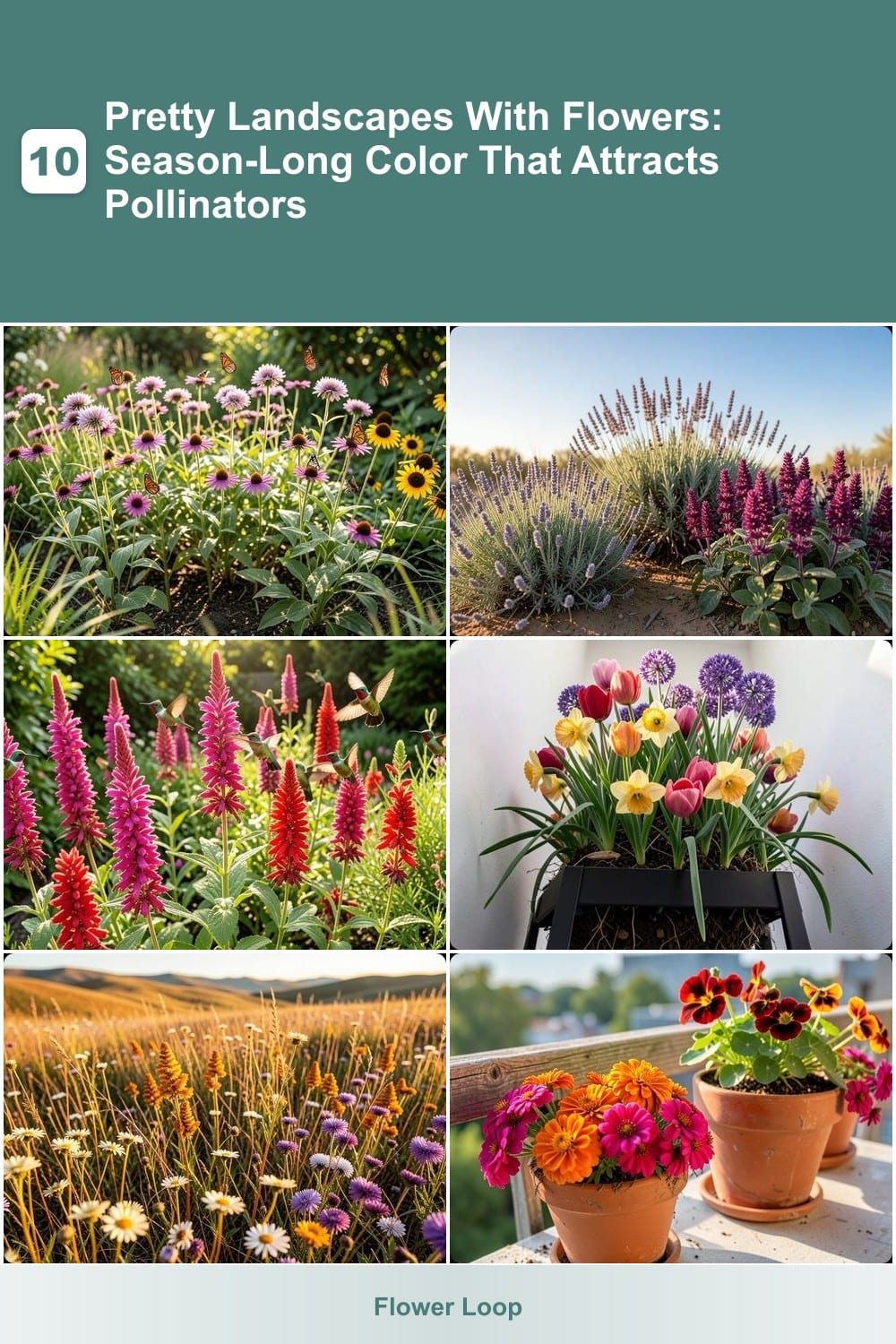
Transform your garden into a pollinator paradise with these 10 stunning flower landscapes that bloom continuously throughout the seasons. Each design attracts bees, butterflies, and hummingbirds while adding year-round color to your outdoor space.
Butterfly Magnet Cottage Garden
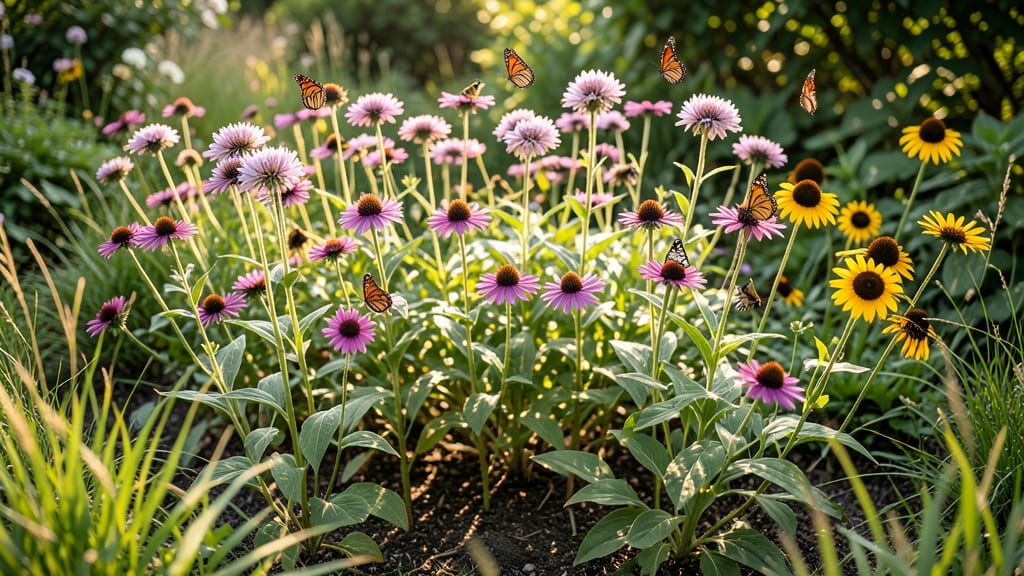
Transform even the tiniest patch of soil into a fluttering paradise with this butterfly magnet cottage garden—a dreamy combo of native milkweed, coneflowers, and black-eyed Susans that thrives in both partial shade and full sun. This trio isn’t just pretty; it’s a pollinator powerhouse, drawing monarchs, swallowtails, and bees with minimal effort from you.
Start by planting milkweed (the monarch caterpillar’s sole food source) alongside coneflowers and black-eyed Susans—all of which bloom from mid-summer through fall. These perennials handle drought once established and spread gently over time, perfect for small spaces like window boxes or borders. Add a few fertilizer-free mulch chips to retain moisture and keep weeds at bay.
This design is ideal for beginners—no fancy tools or expertise required. Just plant, water occasionally, and watch your garden become a buzzing, fluttering oasis. 🌻
Sunny Perennial Border Design
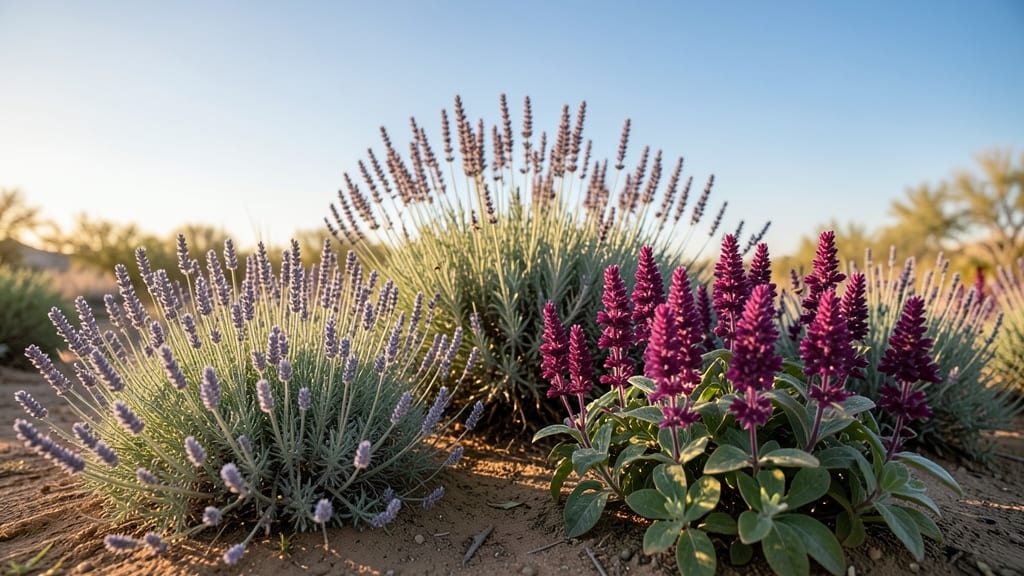
If you live in a hot, dry climate where water conservation is key, this sunny perennial border delivers season-long color without the fuss. The trio of lavender, Russian sage, and salvia creates a fragrant, textured display that thrives on neglect once established—perfect for gardeners who want beauty with minimal effort.
Plant lavender in well-drained soil for its silvery foliage and purple spikes, Russian sage for its airy blue blooms that dance in the breeze, and salvia for its vibrant red or purple flower spikes that hummingbirds adore. All three plants love full sun (6+ hours daily) and drought conditions, making them ideal for xeric landscapes or low-water zones.
This design is especially rewarding for urban gardeners with limited irrigation or those in arid regions—it’s a pollinator magnet that stays lush even when other plants wilt. 🌻
Hummingbird Feeder Garden
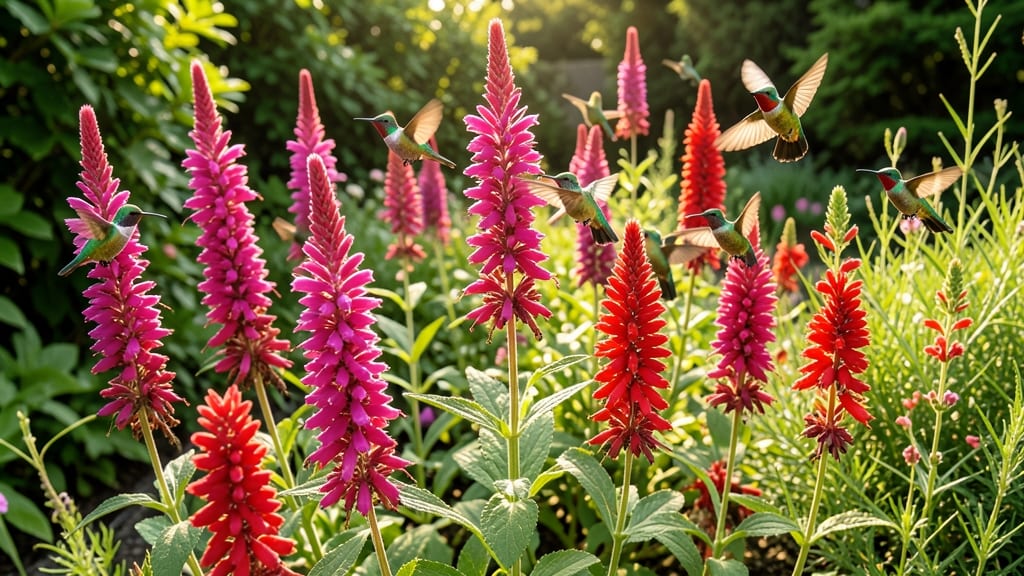
Turn your patio or garden into a hummingbird hotspot with a nectar-rich haven that brings these tiny, iridescent visitors fluttering right to your doorstep. Unlike the butterfly-friendly designs we’ve seen, this garden focuses on bright, tubular flowers that hummingbirds adore—like bee balm, cardinal flower, and fuchsia—which also add vibrant pops of color to your space.
Plant these sun-loving annuals and perennials in clusters near seating areas so you can enjoy the show while sipping morning coffee. Hummingbirds are drawn to red and pink hues, so opt for varieties like ‘Jacob Cline’ bee balm or ‘Becky’ fuchsia for maximum appeal. Keep the soil consistently moist but well-draining, and deadhead spent blooms to encourage continuous flowering from late spring through fall.
This design is perfect for gardeners who love easy bird-watching and want to support local ecosystems without extra effort. Just add a shallow dish of sugar water (1:4 ratio) for an extra boost during migration seasons. 🌻
Spring Bulb Cascade Planter
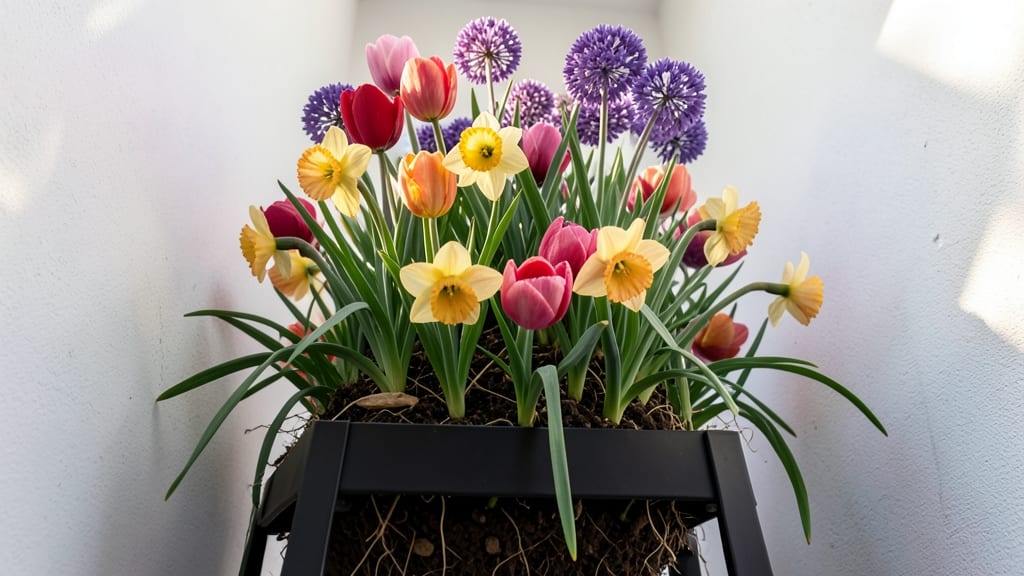
Bring early spring color to tight spaces with a spring bulb cascade planter—a vertical display that turns small balconies or entryways into vibrant pollinator hotspots. This layered design uses tulips, daffodils, and alliums to create a nonstop bloom show from March through May, with each variety emerging at its own perfect time.
Start by planting the tallest bulbs—like alliums—at the bottom, followed by mid-height tulips, and top with early-blooming daffodils. Use a tiered hanging planter or stacked containers to maximize vertical space while keeping maintenance simple. Place in full sun to partial shade and water only when the soil feels completely dry to the touch. The cascading effect not only saves space but also creates a dramatic focal point.
Perfect for urban gardeners, renters, or anyone with limited ground space, this planter delivers year-round visual interest—even after blooms fade, the foliage adds texture. Plus, bees and butterflies adore the early nectar source! 🌷
Wildflower Meadow Revival
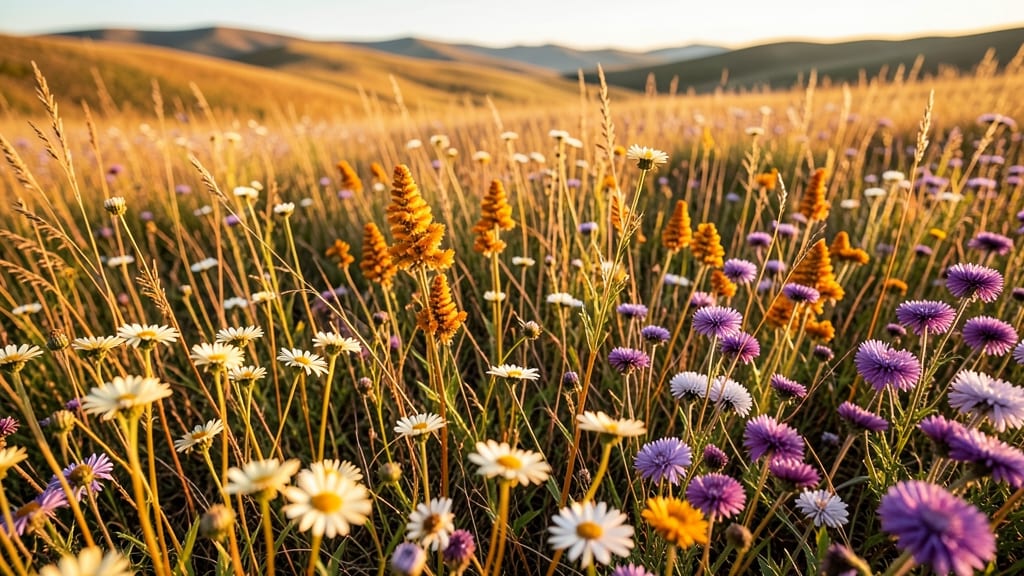
Skip the lawnmower and let nature take over with a wildflower meadow revival—a vibrant, low-maintenance alternative that thrives on sunlight and supports local ecosystems. This design replaces grass with a mix of coreopsis, goldenrod, and asters, creating a tapestry of color that blooms from summer through fall.
Start by clearing existing grass, then scatter native wildflower seeds in late summer or early fall. These hardy plants require minimal watering once established and flourish in full sun. The result? A buzzing, blooming haven for bees, butterflies, and birds—with zero mowing required. Perfect for large properties or eco-conscious gardeners who want to reduce water use and chemical inputs.
This meadow-style garden isn’t just beautiful—it’s a living ecosystem that thrives with almost no effort. Ideal for those with ample space who want to create a sustainable, wildlife-friendly landscape. 🌻
Container Pollinator Paradise
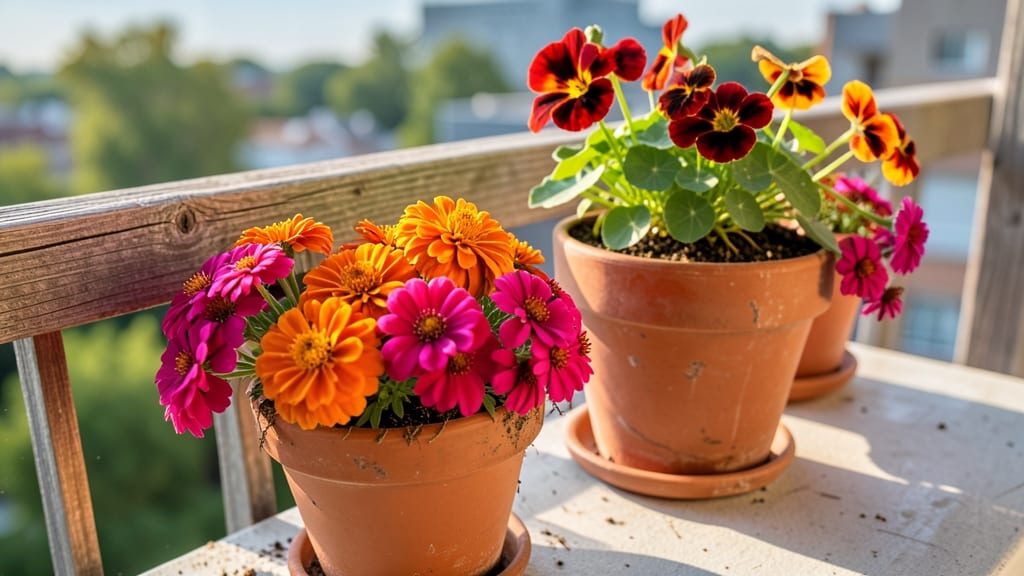
Renting an apartment or short on garden space? A container pollinator paradise brings the buzz of pollinators to any sunny spot—no permanent planting required. This portable trio of marigolds, zinnias, and nasturtiums thrives in pots, allowing you to rotate them for optimal sunlight or even take them indoors during extreme weather.
Start with a large, well-draining container (at least 12 inches deep) and mix marigolds for pest-repelling foliage, zinnias for their bold, long-lasting blooms, and nasturtiums for their edible, trailing flowers. Place in full sun (6+ hours daily) and water when the top inch of soil feels dry. The key to success? Deadhead spent blooms weekly to encourage nonstop flowering from late spring through fall.
This design is perfect for urban balconies, patio renters, or small yards—it’s a pollinator powerhouse that travels with you. Plus, the vibrant colors and easy care make it a conversation starter. 🌻
Shade-Loving Woodland Garden
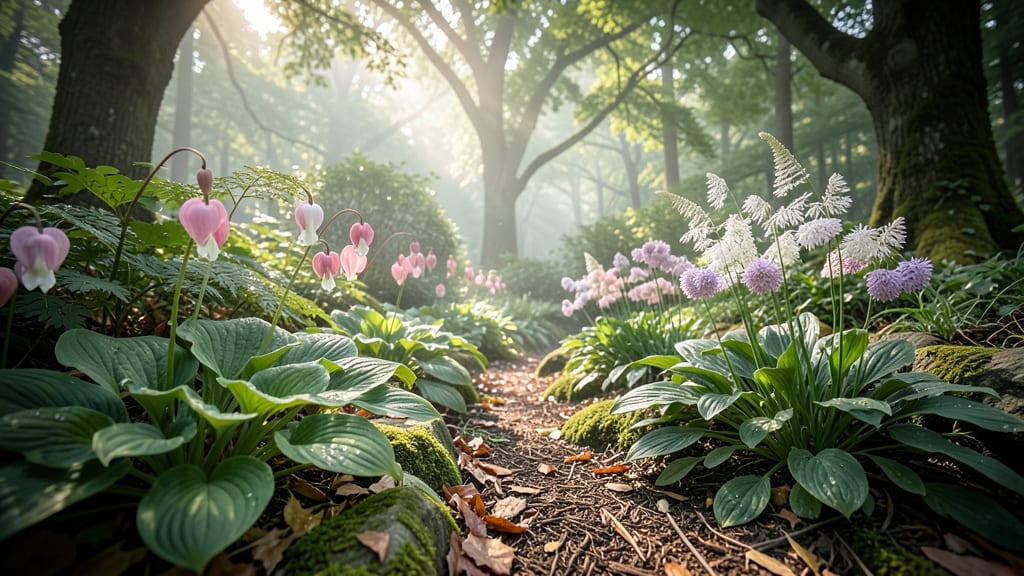
For gardeners with shady spots under trees, a shade-loving woodland garden transforms neglected areas into lush, living tapestries. This design thrives in dappled sunlight where other plants struggle, featuring hostas with their striking foliage, delicate bleeding hearts, and feathery astilbes that bloom in soft pinks and purples.
Start by layering hostas (like ‘Blue Angel’ or ‘Francee’) in the front for their bold blue-green leaves, then add bleeding hearts (Dicentra spectabilis) for heart-shaped flowers in spring, followed by astilbes (Astilbe spp.) for airy plumes that last through summer. Mulch with shredded bark to retain moisture and suppress weeds—these plants prefer moist, well-drained soil and partial to full shade. The result? A serene, textured garden that supports bees and butterflies while requiring minimal care.
This is the perfect solution for wooded properties, urban backyards with mature trees, or north-facing gardens—where others give up, this design thrives. 💚
Edible Flower Pollinator Patch
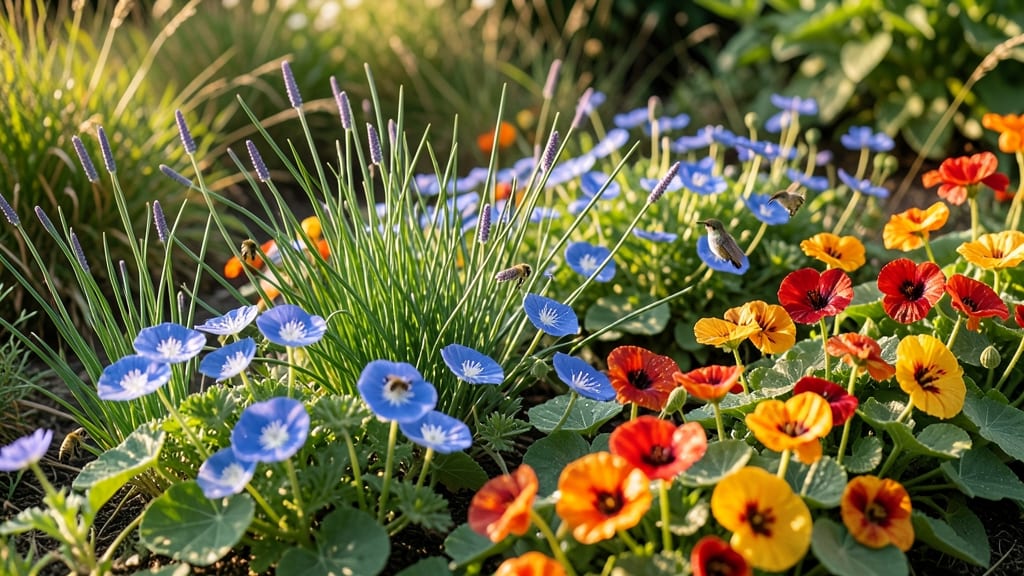
Why settle for just pretty flowers when they can also feed your table? This edible flower pollinator patch combines chives, borage, and nasturtiums—three powerhouse plants that attract bees, butterflies, and hummingbirds while giving you fresh, flavorful blooms for salads, garnishes, and teas.
Start by planting chives (with their delicate purple flowers) alongside borage (star-shaped blue blooms) and nasturtiums (bright orange or red edible flowers). These plants thrive in full sun to partial shade and prefer well-drained soil. The key is spacing them close together—chives and borage add height, while nasturtiums spill over edges, creating a lush, pollinator-friendly border. Harvest flowers in the morning for the best flavor, and let some bloom to keep the pollinators coming.
This design is a game-changer for vegetable gardeners who want to maximize space and benefits. Not only do these flowers support local ecosystems, but they also add a gourmet touch to your meals—imagine nasturtium petals on caprese salad or borage flowers in homemade lemonade! 🌿
Autumn Foliage & Flower Combos
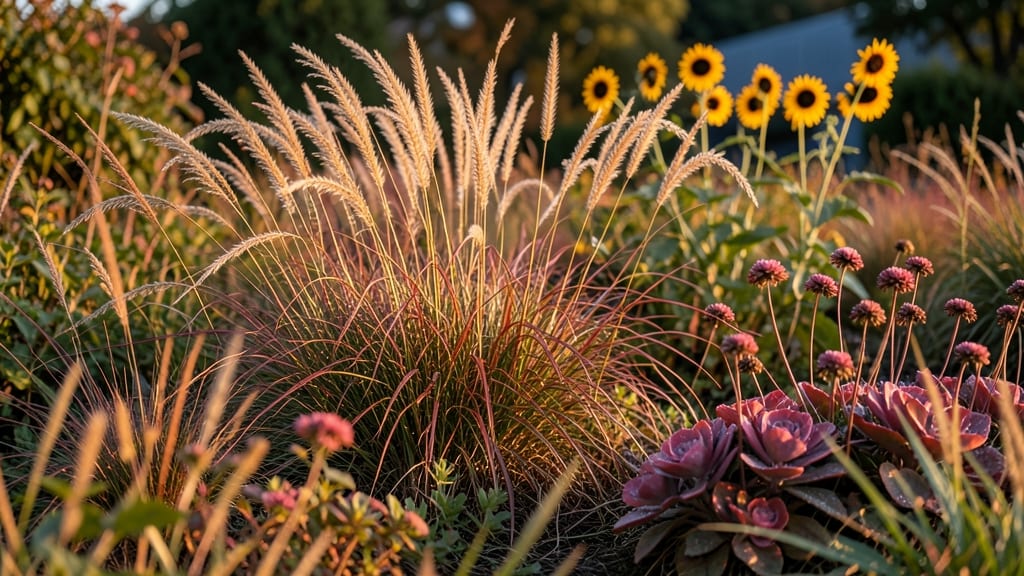
When summer blooms start fading and many gardens lose their luster, this autumn foliage and flower combo keeps the show going with a striking mix of textured grasses and late-season stars. Pair switchgrass and little bluestem (native ornamental grasses) with sedum ‘Autumn Joy’ and black-eyed Susans for a dynamic display that thrives in full sun to partial shade while feeding pollinators through crisp fall days.
Start by planting switchgrass and sedum at the back for height and structure, then tuck black-eyed Susans in front for their golden-yellow blooms. These plants require minimal water once established and handle frost beautifully, with sedum turning deep pink and grasses developing warm copper tones. Add a layer of wood chips to retain moisture and suppress weeds—this combo works equally well in borders or containers.
Perfect for gardeners who love seasonal interest without extra work, this design extends your garden’s lifespan while supporting bees and butterflies when food sources grow scarce. 🌿
Winter Interest Pollinator Garden
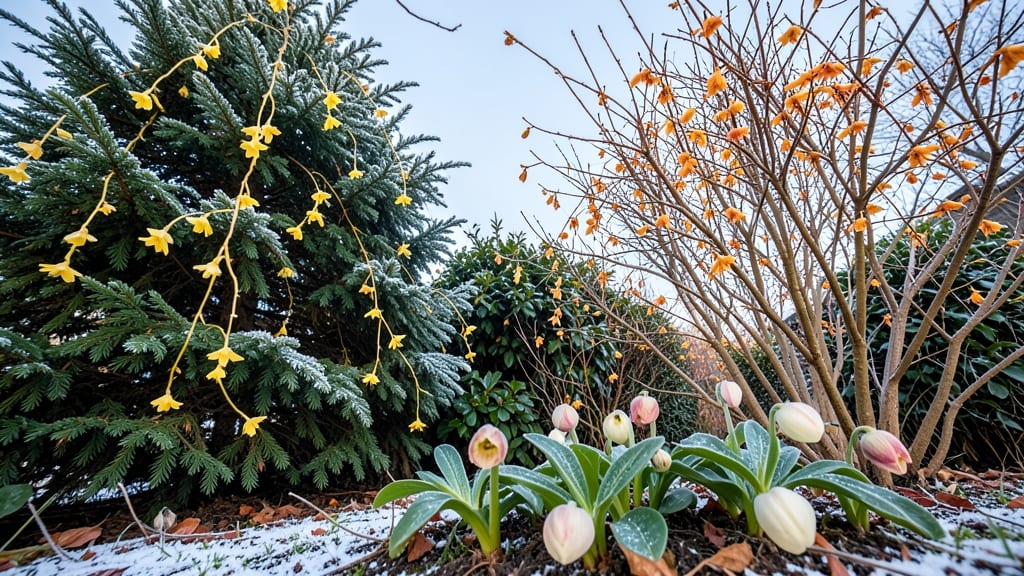
When most gardens lie dormant under winter’s chill, your landscape can still buzz with life thanks to a winter interest pollinator garden. This design centers on evergreen shrubs like hellebores, winter jasmine, and witch hazel, which provide both structure and early-season nectar when other plants are asleep.
Start by planting hellebores (with their nodding, bell-shaped blooms) in partial shade for winter color, while winter jasmine (with its bright yellow flowers) thrives in full sun. Add witch hazel for fragrant, late-winter blooms that attract early bees. These plants require minimal care—just well-draining soil and occasional pruning to maintain shape. Their evergreen foliage also adds year-round texture to your garden.
This design is perfect for gardeners who want to support pollinators year-round while keeping their landscape visually striking in the coldest months. Plus, it’s ideal for those with shady or partially sunny areas that often feel neglected in winter. ✨